
Stamp 1G Ireland: Graduate Stay-Back Permission & Spousal Work Rights
The Stamp 1G, also known as the Stay-back Visa, allows legally-resident Irish educated non-EEA graduates who hold an academic qualification from a recognised Irish educational establishment to remain in the ROI and look for work.
If you would like to apply for a Stamp 1G or simply want to learn more about the benefits of holding a Stamp 1G, give the Total Law team a call on +353 061 518 025 or contact us via our website.
Page Contents
- What is Stamp 1G in Ireland?
- Eligibility Requirements
- Other Conditions
- Benefits
- Graduate Student Who Currently Holds Stamp 2
- Stamp 1G for Spouse/De Facto Partner
- Stamp 1G to Stamp 4 — Pathway to Long-Term Residency
- Validity Period
- Application Process
- Registering Permission
- Required Documents
- Fees & Processing Times
- Stamp 1G Extension in Ireland
- How Total Law Can Help
- Frequently Asked Questions
What is Stamp 1G in Ireland?
Stamp 1G is an Irish immigration permission available to certain graduates and eligible family members of people living and working in Ireland.
Graduates who complete an eligible Irish qualification may receive Stamp 1G under the Third Level Graduate Programme. This permission allows them to seek graduate-level employment and work full-time without an employment permit.
Stamp 1G does not allow a graduate to operate a business or work on a self-employed basis. A graduate who wishes to remain in Ireland after this permission expires may need to obtain an appropriate employment permit or another immigration permission.
Stamp 1G may also be available to eligible spouses, civil partners and de facto partners who have been granted family reunification with certain sponsors, including:
- Critical Skills Employment Permit holders
- General Employment Permit holders
- Intra-company transferee employment permit holders
- Researchers in Ireland on hosting agreements
- Certain Non-Consultant Hospital Doctors holding Multi-Site General Employment Permits
- Certain reactivation employment permit holders
A family member granted Stamp 1G may take up employment in Ireland without applying for a separate employment permit.
The requirements and registration process depend on the applicant’s relationship to the sponsor and the sponsor’s immigration or employment-permit status.
"I'm very happy with the standard of training received on the OISC Level 1 course, i passed my exam. Thank you!"
Liam Calvert
Posted 6 years ago
"My application was approved and a huge weight has been lifted from our shoulders this year "
Akeel Lakar
Posted 6 years ago
"We used this service for the spouse visa extension application to assure that all the information was valid and correct."
Nabil Anwar
Posted 6 years ago
Eligibility Requirements for Stamp 1G
The Third Level Graduate Programme allows eligible non-EEA graduates who completed their studies in Ireland to remain after graduation on Stamp 1G.
This permission allows graduates to seek graduate-level employment and work full-time without an employment permit. It does not allow self-employment or the operation of a business.
To qualify, you must:
- Have completed an eligible programme of study in Ireland and received an award at National Framework of Qualifications Level 8 or above from a recognised Irish awarding body
- Hold a current Stamp 2 student immigration permission and an up-to-date Irish Residence Permit when applying
- Apply within six months of receiving written confirmation from your awarding body or institution that you achieved the qualification
- Provide evidence of your final award, such as an academic parchment or an official letter confirming that you completed the course
Graduates with an NFQ Level 8 award may receive Stamp 1G for a duration of no more than 12 months. The combined time spent on Stamp 2 and Stamp 1G under the programme must be no more than seven years.
Graduates with an NFQ Level 9 award or above may receive Stamp 1G for an initial 12 months. They may apply for an additional period of up to 12 months if they can demonstrate that they have taken steps to secure suitable graduate-level employment.
Evidence may include attendance at job interviews or registration with graduate employment agencies. Time spent on the student pathway must be no more than 8 years.

Other Requirements for Stamp 1G
A graduate may access the Third Level Graduate Programme on no more than two separate occasions.
A person who previously received permission under the programme after achieving a Level 8 or higher award may be able to re-enter it after obtaining a higher award, such as a Level 9 qualification. The eight-year student-pathway limit still applies.
Eligibility Requirements for Family-Member Stamp 1G
Stamp 1G may be available to an eligible spouse, civil partner, or de facto partner who has been granted family reunification with a qualifying sponsor in Ireland.
Qualifying sponsors may include Critical Skills Employment Permit holders, General Employment Permit holders, intra-company transferee employment permit holders, researchers on hosting agreements, and certain other employment-permit holders.
A person granted Stamp 1G through this route may work in Ireland without obtaining a separate employment permit. Their eligibility depends on their family relationship, the sponsor’s immigration status, and the family-reunification rules that apply to their case.
What Can You Do on a Stamp 1G?
Stamp 1G allows eligible holders to live and work in Ireland without obtaining a separate employment permit.
A Stamp 1G holder may:
- Work full-time in Ireland, subject to Irish employment law
- Take up employment without obtaining an employment permit
- Undertake a course of study in Ireland
- Renew their registration where they continue to meet the requirements of their Stamp 1G route
A Stamp 1G holder may not:
- Establish or operate a business
- Work on a self-employed basis
The duration of Stamp 1G permission depends on the reason it was granted. A graduate with an NFQ Level 8 award may receive permission for a duration of no more than 12 months.
A graduate with an NFQ Level 9 award or above may receive an initial 12 months and may apply for a further period of up to 12 months if they meet the requirements.
Family-member Stamp 1G permission depends on the holder continuing to qualify through their relationship and the sponsor’s status.
Stamp 1G does not automatically lead to Stamp 4 after 5 years. Graduates who want to remain in Ireland after their graduate permission ends may need to secure an appropriate employment permit or another immigration permission.
Stamp 1G and Naturalisation
Time spent in Ireland on certain Stamp 1G permissions may count as reckonable residence for an application for Irish citizenship by naturalisation.
This includes Stamp 1G permission held:
- Under the Third Level Graduate Programme
- As the partner of a Critical Skills Employment Permit holder
- As the partner of a researcher in Ireland on a hosting agreement
Reckonable residence is only one part of the naturalisation requirements. An applicant must also meet the required residence conditions and provide acceptable evidence of their residence history.
Irish Immigration Service Delivery provides a Naturalisation Residency Calculator to help applicants check whether their permissions can be counted.

Stamp 1G for Graduates: Third Level Graduate Programme
The Third Level Graduate Programme allows eligible non-EEA graduates who completed their studies in Ireland to apply for Stamp 1G.
Applicants must have completed an eligible Irish qualification at National Framework of Qualifications Level 8 or above. They must also hold a current Stamp 2 student immigration permission when applying.
Stamp 1G allows graduates to seek graduate-level employment and work full-time in Ireland without holding an employment permit. Stamp 1G does not permit self-employment or the operation of a business.
A graduate who wishes to remain in Ireland after Stamp 1G expires may need to obtain an appropriate employment permit or another immigration permission. The relevant employment-permit route depends on the role, employer, salary, occupation, and other eligibility requirements.
Employment permit applications are submitted through Employment Permits Online, which is administered by the Department of Enterprise, Tourism and Employment. The application must be received at least 12 weeks before the proposed employment start date.
Stamp 1G for Level 9 and Level 10 Graduates
Graduates with an award at the National Framework of Qualifications Level 9 or above may receive Stamp 1G permission for up to 24 months in total.
This can include graduates with Level 9 master’s qualifications and Level 10 doctoral qualifications. The permission is granted for an initial 12-month period, with an additional 12-month period available if the graduate continues to meet the requirements.
To seek the second 12-month period, the graduate must show that they have taken appropriate steps to access suitable graduate-level employment.
Supporting evidence may include:
- Proof of attendance at graduate-level job interviews
- Evidence of applications for suitable graduate-level positions
- Registration with graduate employment agencies
The combined duration of a Level 9-or-above graduate’s Stamp 2 and Stamp 1G permission must be for a duration of no more than 8 years.
For a graduate with a Level 8 award, the combined duration of Stamp 2 and Stamp 1G permission must be no more than 7 years.
Stamp 1G for Spouses & Partners of CSEP and GEP Holders
Stamp 1G may be available to eligible spouses, civil partners, and de facto partners who have been granted family reunification with certain employment permit holders or researchers in Ireland.
Eligible sponsors may include:
- Critical Skills Employment Permit holders
- General Employment Permit holders
- Intra-Corporate Transferee employment permit holders
- Researchers in Ireland on hosting agreements
- Certain Non-Consultant Hospital Doctors holding Multi-Site General Employment Permits
- Certain holders of reactivation employment permits
A person registered on Stamp 1G under this route may work in Ireland without obtaining a separate employment permit. They may also undertake a course of study.
Stamp 1G does not permit the holder to establish or operate a business or work on a self-employed basis.
Stamp 1G for Partners of General Employment Permit Holders
On 15 May 2024, the Irish Immigration Service Delivery introduced a change affecting eligible spouses and partners of holders of General Employment Permit and Intra-Corporate Transferee employment permits.
Eligible people who applied for and were granted family reunification under the Non-EEA Family Reunification Policy became eligible to register on Stamp 1G conditions rather than Stamp 3 conditions.
This allows eligible Stamp 1G holders to:
- Work in Ireland without obtaining an employment permit of their own
- Undertake a course of study in Ireland
The change applies to eligible spouses and partners. It does not apply to all family members of employment-permit holders.
Family Reunification Timing
The time at which a family member may apply depends on the sponsor’s immigration category and the relationship involved.
For a relevant Category C sponsor, a spouse, civil partner, de facto partner, or unmarried dependent child may apply after the sponsor has legally worked in Ireland for one year.
For a relevant Category B sponsor, an eligible spouse, civil partner, de facto partner, or unmarried dependent child may apply immediately. Family-reunification applications remain subject to the applicable policy and financial requirements.
Renewal and Stamp 4
Stamp 1G registration must be renewed each year while the holder continues to meet the applicable requirements.
After five years on Stamp 1G, a person may be eligible for Stamp 4 permission. This is not automatic, and the Irish Immigration Service Delivery will assess eligibility based on the person’s circumstances.
Stamp 1G to Stamp 4 — Pathway to Long-Term Residency
Stamp 1G is a time-limited immigration permission. It may form part of a longer-term plan to remain in Ireland, although the options available depend on the reasons for which Stamp 1G was granted.
A person who holds Stamp 1G as the eligible spouse, civil partner, or de facto partner of an employment-permit holder or researcher may be eligible to apply for Stamp 4 after five years on Stamp 1G.
Irish Immigration Service Delivery assesses each application based on the person’s circumstances and immigration record.
Time spent on qualifying Stamp 1G permission may also count as reckonable residence for an application for Irish citizenship by naturalisation.
Irish Immigration Service Delivery’s Residency Calculator allows Stamp 1G to be entered as Stamp 1 when checking reckonable residence.
Stamp 4 is different from Long Term Residency. Long-term residency is a separate scheme for people who have completed at least 60 months of qualifying residence as employment-permit holders.
What Stamp 4 Allows
Subject to the conditions attached to the individual permission, Stamp 4 may allow a person to:
- Work in Ireland without an employment permit
- Work for an employer without being tied to an employment permit
- Establish or operate a business, subject to Irish law
Stamp 4 does not guarantee eligibility for Long Term Residency or Irish citizenship by naturalisation. Each route has separate legal and residence requirements.
Critical Skills Employment Permit Holders
The route for a Critical Skills Employment Permit holder differs from the family-member Stamp 1G route.
After 21 months of qualifying employment, an eligible Critical Skills Employment Permit holder may apply to register on Stamp 4 conditions. This is not automatic, and the person must submit the required evidence to the Irish Immigration Service Delivery.
From 30 November 2023, the Department of Enterprise, Tourism and Employment stopped accepting applications for Stamp 4 support letters. Eligible applicants now apply through the immigration registration process.
Maintaining valid immigration permission and complying with its conditions is important throughout any application for an upgraded permission, Long Term Residency, or citizenship by naturalisation.
Stamp 1G Processing Times and Current Delays
Irish Immigration Service delivery processes Irish Residence Permit renewals and stamp-category changes, including applications connected to Stamp 1G permission.
Processing times depend on the type of application and the number of applications received. Irish Immigration Service Delivery has stated that certain online renewal categories take approximately 6 to 8 weeks from the date of the initial application.
Processing times can change. Applicants should check the latest Irish Immigration Service Delivery renewal updates before submitting an application.
Since 4 November 2024, people living in every county in Ireland have had to submit applications to renew their residence permission or change their immigration stamp through the ISD online renewal portal.
Applicants may submit an online renewal application up to 12 weeks before their current Irish Residence Permit card expires. Irish Immigration Service Delivery encourages eligible applicants to apply as early as possible within this period.
If an applicant submits a complete renewal application before their current Irish Residence Permit card expires, they may remain in Ireland on the conditions of their existing permission for up to 12 weeks after expiry while awaiting a decision and a new card.
This arrangement is subject to the applicant submitting the renewal before expiry and uploading the required supporting documents.
After approval, the Irish Immigration Service Delivery sends an application-completed email and posts the new Irish Residence Permit card to the address provided in the online application. Delivery may take up to a further two weeks after the registration renewal is completed.
Applicants should provide a complete and accurate postal address, including an Eircode and apartment number where relevant, so that the Irish Residence Permit card can be delivered successfully.
What Happens When Stamp 1G Expires?
Stamp 1G is a time-limited immigration permission. A person who wishes to remain in Ireland after their permission ends must secure another valid immigration permission before the current permission expires.
Graduates should review their options well before their Stamp 1G expiry date. Depending on their circumstances, these options may include applying for an employment permit, applying for a further Stamp 1G period where eligible, returning to study, or leaving Ireland.
A graduate who has an eligible job offer may apply for an appropriate employment permit, such as a General Employment Permit or a Critical Skills Employment Permit. Eligibility depends on the role, salary, employer, occupation, contract, and other requirements for the relevant permit.
A graduate with an NFQ Level 9 award or above may be eligible to apply for a further period of Stamp 1G permission of up to 12 months. They must show that they have taken appropriate steps to secure suitable graduate-level employment.
A person who wishes to return to education must meet the requirements for the relevant student immigration permission. The student-permission time limits also apply.
For a Level 8 graduate, the combined duration of Stamp 2 and Stamp 1G permission must be no more than seven years. For a Level 9-or-above graduate, the combined duration must be no more than 8 years.
A person should not remain in Ireland after their immigration permission expires unless they have submitted an eligible application to renew or change their permission through the required process.
An expired permission can affect a person’s legal residence and may affect future applications to the Irish Immigration Service.

How Long Does Stamp 1G Last?
The length of Stamp 1G permission depends on the graduate’s qualification level under the Third Level Graduate Programme.
A graduate with a National Framework of Qualifications Level 8 award may receive Stamp 1G permission for a duration of no more than 12 months.
A graduate with a National Framework of Qualifications Level 9 award or above may receive Stamp 1G permission for up to 24 months in total.
This includes eligible Level 9 master’s graduates and Level 10 doctoral graduates. The permission is granted for an initial 12 months, with a further period of up to 12 months available where the graduate continues to meet the requirements.
To apply for a further period, the graduate must show that they have taken appropriate steps to access suitable graduate-level employment.
Evidence may include:
- Proof of attendance at graduate-level job interviews
- Evidence of applications for suitable graduate-level roles
- Registration with graduate employment agencies
For graduates with an NFQ Level 9 award or above, the combined time spent on Stamp 2 student permission and Stamp 1G permission must be for a duration of no more than 8 years.
Stamp 1G is an immigration permission, not a visa. A graduate who qualifies for the second period must apply to renew their Stamp 1G registration before their existing permission expires.
How to Apply for Stamp 1G in Ireland (Step-by-Step)
Overview
Eligible graduates must apply for Stamp 1G within 6 months of receiving written confirmation from their awarding body or institution that they achieved the qualifying award.
Graduates applying to move from Stamp 2 student permission to Stamp 1G must submit an application through the ISD online renewals portal. This process is available to applicants living anywhere in Ireland.
Since 4 November 2024, the Irish Immigration Service Delivery has required applications to renew residence permission or change immigration stamp category to be submitted online by applicants nationwide.
Applicants must be in Ireland when submitting an online application. Applications submitted from outside Ireland are not accepted.
Online Application Steps
To apply to change from Stamp 2 to Stamp 1G, follow these steps:
- Create an account on, or log in to, the ISD online renewals portal
- Check the documents required for the Stamp 1G application before starting the online form
- Select the Registration Renewal form and complete the application
- Upload clear digital copies of the required supporting documents
- Pay the registration fee if it applies to the application
- Submit the completed application through the portal
The documents required include a copy of the biometric page of the current passport and a copy of the most recent Irish Residence Permit card.
Graduates must also provide evidence that they achieved the qualifying award. This may include an academic parchment or an official letter from the awarding body confirming course completion, where the formal parchment is not yet available.
After submission, the Irish Immigration Service Delivery sends an acknowledgement email containing an OREG application number and a payment receipt confirming payment.
If the application is successful, the Irish Immigration Service Delivery confirms this by email and posts the new Irish Residence Permit card to the address provided. The card may take up to 15 business days to arrive after processing is complete.
Fee and Timing Clarification
Applicants may submit an online renewal or change-of-stamp application up to 12 weeks before their current Irish Residence Permit card expires. There is no loss of permission time from applying early, as renewed permission is calculated from the current expiry date.
The registration fee is €300 for most permissions. Some applicants are exempt, so the article should not state that every Stamp 1G applicant must pay a fee without checking the basis of their permission.
Registering Permission in Ireland
If you are required to register your Irish immigration permission, you must register it with Immigration Service Delivery within 90 days of arriving in Ireland or receiving the relevant permission.
Registration records that you have permission to remain in Ireland, and allows the Irish Immigration Service to issue an Irish Residence Permit card.
Since 13 January 2025, Immigration Service Delivery has managed first-time immigration registration for people living in every county in Ireland.
First-time registration takes place in person at the Registration Office at 13–14 Burgh Quay, Dublin 2. Applicants must book an appointment through the ISD Digital Contact Centre before attending.
If you cannot secure an appointment within 90 days, the Irish Immigration Service Delivery states that it will not cancel your permission or require you to leave Ireland while you wait to register.
Keep evidence of your appointment booking. A confirmed appointment is sufficient to remain in Ireland until the date of that appointment.
Irish Residence Permit
After you successfully register, the Irish Immigration Service Delivery posts an Irish Residence Permit card to the address provided during registration.
The card records your immigration permission and the conditions under which you may legally live in Ireland. You should receive it within 10 working days after successful first-time registration.
An Irish Residence Permit card is not a national identity card. Keep it secure and ensure that the personal details and address connected to your registration remain accurate.
Required Documents for Stamp 1G Application
Applicants seeking Stamp 1G under the Third Level Graduate Programme must provide evidence that they have achieved the qualifying Irish award.
They must also hold a current Stamp 2 student immigration permission and a current Irish Residence Permit card when applying.
Documents may include:
- An academic parchment or degree scroll showing that you achieved the qualifying award
- An official letter from the awarding body confirming that you completed the course and achieved the qualifying award, where the parchment is not yet available
- A clear copy of the biometric page of your current valid passport
- A copy of your current Irish Residence Permit card showing your Stamp 2 student permission
Applicants should upload clear and readable digital copies of all documents required by the Irish Immigration Service Delivery. Incomplete applications may delay the decision process.
Medical Insurance
Non-EEA students must hold private medical insurance while living in Ireland for study. A student who is not covered by a college group insurance scheme must hold individual private medical insurance bought in Ireland.
For a first-year student relying on travel insurance, the policy must provide at least €25,000 cover for accident and €25,000 cover for illness and disease. It must also cover any period of hospitalisation.
The article should not state that this exact insurance requirement applies to every Stamp 1G graduate application unless the live ISD Stamp 1G application instructions require the applicant to upload insurance evidence.
The requirement is clearly stated in the current student-permission guidance.
Family-Member Route
Eligible spouses, civil partners, and de facto partners applying for Stamp 1G through family reunification should not use the graduate document list.
Their required documents depend on the family reunification route, their relationship to the sponsor, and the sponsor’s employment permit or researcher status.
Fees & Processing Time for Stamp 1G
The registration fee for Stamp 1G is €300 if the fee applies to your application.
The fee may apply when you register for the first time, renew your Irish Residence Permit card, or apply to change immigration stamp category. Certain applicants are exempt from the registration and renewal fee.
Irish Immigration Service Delivery processes online registration renewals and applications to change stamp category. Processing times depend on application volumes and the type of application submitted.
Irish Immigration Service Delivery has stated that certain online renewal categories take approximately 6 to 8 weeks from the date of the initial application. It has also been stated that no category should wait longer than 16 weeks.
Applicants may submit an online renewal or change-of-stamp application up to 12 weeks before their current Irish Residence Permit card expires.
Fee Exemptions
The €300 registration fee does not apply to every person. Exemptions may apply to people who:
- Have refugee status
- Have subsidiary protection status
- Have permission to remain under section 49 of the International Protection Act 2015
- Are aged from 16 to 18
- Live in Ireland on the basis of marriage to an Irish citizen
- Are family members of EU citizens
- Are Ukrainian citizens or certain foreign nationals who hold Temporary Protection permission
Whether an exemption applies depends on the basis of the person’s immigration permission. A graduate holding Stamp 1G should not assume that they are exempt from the fee.
Stamp 1G Extension in Ireland
Stamp 1G registration may be renewed where the holder continues to meet the requirements for the immigration-permission route under which it was granted.
For the family-member route, this may include eligible spouses, civil partners, and de facto partners of:
- Critical Skills Employment Permit holders
- General Employment Permit holders
- Intra-Corporate Transferee employment permit holders
- Researchers in Ireland on hosting agreements
- Certain Non-Consultant Hospital Doctors with Multi-Site General Employment Permits
- Certain reactivation employment permit holders
A family-member Stamp 1G holder must renew their immigration registration each year while they remain eligible.
The renewal depends on the ongoing family relationship, the sponsor’s qualifying permission or employment permit, and the applicable Irish family reunification rules.
Applications to renew an Irish Residence Permit card or change immigration stamp category must be submitted through the ISD online renewals portal.
Applicants may submit a renewal application up to 12 weeks before their current Irish Residence Permit card expires.
How to Renew Stamp 1G
To renew Stamp 1G, the applicant should:
- Log in to the ISD online renewals portal
- Select and complete the relevant Registration Renewal form
- Upload clear copies of the current passport, current Irish Residence Permit card, and all route-specific supporting documents
- Pay the registration fee if it applies
- Submit the completed application before the current permission expires
After the Irish Immigration Service Delivery completes a successful renewal, it sends an email confirming the application is complete and posts the new Irish Residence Permit card to the address provided.
The card may take up to 15 business days to arrive after processing is complete.
Graduate Stamp 1G Extensions
Graduate Stamp 1G permission follows separate rules.
A graduate with an NFQ Level 8 award may receive permission for a duration of no more than 12 months. A graduate with an NFQ Level 9 award or above may seek a further period of up to 12 months after the initial period, where they meet the continuing eligibility requirements.
How Total Law Can Help?
If you would like to apply for a Stamp 1G or simply want to learn more about the benefits of holding the stamp, Total Law is here to help.
We are an experienced team of immigration lawyers and offer several packages for graduates wishing to remain in the ROI and find work.
Our Stamp 1G packages include:
- Advice Package.
- Application Package.
- Fast Track Package.
- Document Check Package.
To learn more about how we can help with your Stamp 1G application, give the Total Law team a call on +353 061 518 025 or contact us via our website.

Advice Package
Get clear, expert advice on your visa options, eligibility and application before you commit to applying.

Application Package
Let our immigration lawyers prepare, check and manage your application so you can apply with confidence.

Fast Track Package
Need to apply quickly? Get priority handling by our immigration lawyers from preparation to submission.

Appeal Package
Been refused or received an unfavourable decision? Get expert legal help to challenge it or determine your next step.

The Advice Package
During this Advice Session, an immigration lawyer will assess your circumstances, explain your options and tell you what you need to do to make a strong application.
We review your circumstances, explain the relevant requirements, identify potential problems or refusal risks, and advise you on the evidence and next steps.

The Application Package
With our Application Package, your dedicated immigration lawyer will assess your case, prepare your application, check your supporting documents and submit your forms on your behalf.
We check your application for missing information, inconsistencies and potential issues before submission, helping you avoid common mistakes that could affect your case.
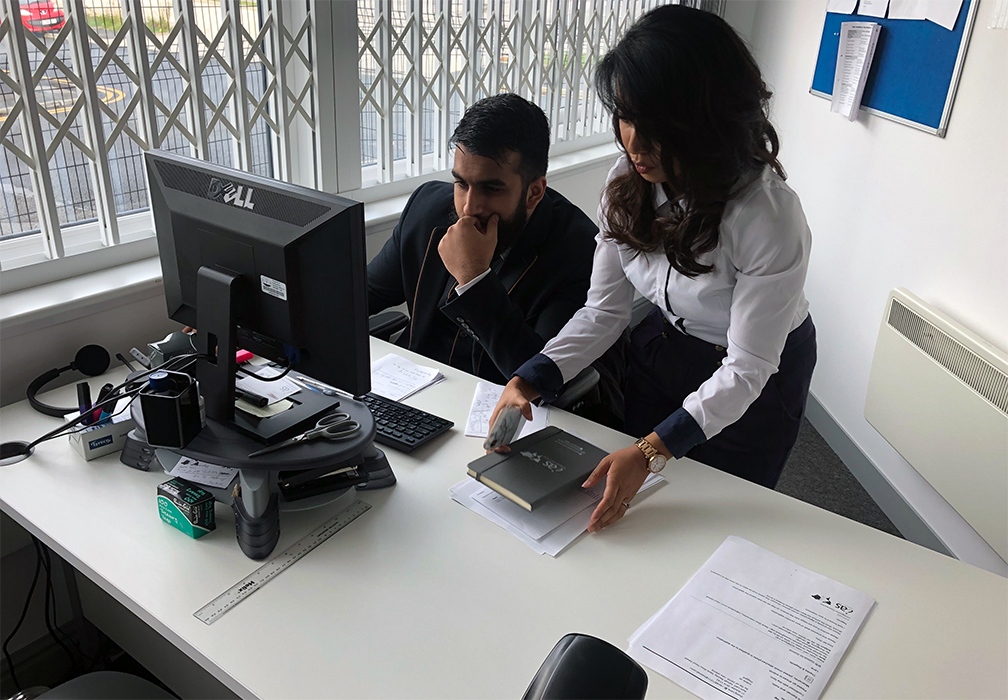
The Fast Track Package
Our Fast-Track Application Package gives your case priority with our immigration lawyers, helping you get your application prepared, checked and submitted as quickly as possible.
Your case receives priority handling, including accelerated document reviews, application preparation, communication with your caseworker and submission support.

The Appeal Package
Our immigration lawyers will review the decision, explain why it was refused and advise on the strongest option available to you, including an appeal, review or fresh application where appropriate.
We will examine the reasons for refusal, identify weaknesses or errors, assess your available options and provide the legal support and representation your case requires.
Related pages for your continued reading.
Frequently Asked Questions
Apply to renew your IRP card or change your immigration permission up to 12 weeks before it expires. Enter the expiry date shown on your card, and contact ISD via its Customer Service Portal if the online system displays an error.
Yes. You may apply for a new student immigration permission if you meet the requirements for an eligible course.
A higher qualification may be required if you want to access the Third Level Graduate Programme again, and the 7-year or 8-year student-permission limits may apply.
You must hold a current Stamp 2 student permission when applying for Stamp 1G under the Third Level Graduate Programme. If your permission has expired, you should contact the Irish Immigration Service Delivery to check your options.
If you cannot secure an appointment within 90 days, ISD states that it will not cancel your permission or require you to leave Ireland while you wait. Keep evidence of your appointment booking and attend on the scheduled date.
No. Graduates applying for Stamp 1G under the Third Level Graduate Programme must be in Ireland and hold a current Stamp 2 student permission at the time of application.
Yes. Stamp 1G allows you to work full-time in Ireland without an employment permit, subject to Irish employment law. You cannot establish or operate a business or work on a self-employed basis.
Processing times vary. ISD has stated that certain online renewal categories take about 6 to 8 weeks, and applicants may apply up to 12 weeks before their IRP card expires. Nationwide online renewal and change-of-stamp applications have been in place since 4 November 2024.
Yes, Stamp 1G held under the Third Level Graduate Programme may count as reckonable residence for Irish citizenship by naturalisation.
You must have 5 years of reckonable residence, including one continuous year immediately before applying.
Yes. Eligible spouses, civil partners and de facto partners of General Employment Permit and Intra-Corporate Transferee employment permit holders who are granted family reunification may receive Stamp 1G and work without an employment permit.
A General Employment Permit holder’s eligible family member may apply for family reunification after the sponsor has legally worked in Ireland for one year.
You must secure another valid immigration permission before Stamp 1G expires.
Graduates may apply for an employment permit or, if eligible, a further Stamp 1G period, while eligible family-member Stamp 1G holders may apply for Stamp 4 after five years on Stamp 1G.

Clear, professional guidance.
Get clear, professional guidance for your immigration case.
Call Now Call To Discuss