
Stamp 3 Permission: Conditions, Eligibility & How to Apply
The Irish immigration stamps are Ireland permissions that provide a work permit and residency to foreign nationals. Stamp 3 is offered to those who wish to gain permission to remain for more than 90 days in Ireland as volunteers, family members, or Ministers of Religion. The stamp system does not apply to EU, EEA or Swiss citizens.
The Irish immigration stamp system is quite complicated, and it can be difficult knowing which stamp number you should apply for. Total Law can help. Call us today on +353 061 518 025 or contact us online.
What is Stamp 3 in Ireland?
Stamp 3 in Ireland is an immigration permission that allows a person to live in Ireland but not work or engage in any business or profession.
Stamp 3 is provided to non EU, EEA or Swiss citizen that intend to either:
- Stay in Ireland for volunteering purposes for non-profit organisations
- Stay in Ireland for religious appointments, such as religious ministers
- Stay in Ireland as they are the spouse, civil partner, de facto partner or dependent children of a permanent resident of Ireland.
Stamp 3 is considered reckonable residence for those who wish to become an Irish citizen.
"I'm very happy with the standard of training received on the OISC Level 1 course, i passed my exam. Thank you!"
Liam Calvert
Posted 6 years ago
"My application was approved and a huge weight has been lifted from our shoulders this year "
Akeel Lakar
Posted 6 years ago
"We used this service for the spouse visa extension application to assure that all the information was valid and correct."
Nabil Anwar
Posted 6 years ago
Can You Work on a Stamp 3 in Ireland?
No. Stamp 3 is a residence-only permission — it does not allow you to work, operate a business, or engage in any trade or profession in Ireland.
This is one of the most important conditions to understand before you apply. If you take up employment without the correct permission, your Stamp 3 could be revoked and you may face difficulties with future Irish immigration applications.
The Exception: Spouses and Partners of Certain Employment Permit Holders
Since May 2024, if you are the spouse or de-facto partner of a General Employment Permit (GEP) or Intra-Corporate Transferee (ICT) permit holder and you are already living in Ireland on Stamp 3, you can work without needing a separate employment permit. You do not need to get a new Irish Residence Permit (IRP) card until your current one expires. ISD provides a Stamp 3 to 1G employer notice that you can show to any employer as proof of your work entitlement.
This exception applies only to spouses and de-facto partners — not to other dependants such as children.
If You Want to Work in Ireland
If you want to work and Stamp 3 is not the right permission for you, our immigration lawyers can advise you on the correct route. Call us on +353 061 518 025 or contact us online.
Dependants/Civil or De Facto Partners/Spouse Employment Permit
If you are a family member of an Irish citizen or of someone with Irish dual citizenship, or you are a family member of someone with a Critical Skills Employment Permit (CSEP) Holders and Researchers under a Hosting Agreement, then the Dependant/Partner/Spouse Employment Permit may be a better choice for you.
The Dependant/Partner/Spouse Employment permit offers:
- A free application process
- All jobs apart from domestic operatives are allowed
- The job you are applying for doesn’t need to go through a Labour Market Needs Test (i.e, the job doesn’t need to be publicly advertised).
Please note that if you are hired to work but you do not have a valid employment permit, your visa may be revoked and you may have issues with Irish immigration in future.

What Are the Conditions and Restrictions of Stamp 3 permission?
Stamp 3 does not permit any form of employment, self-employment, or business activity in Ireland. If you wish to work, you must obtain a separate employment permit and your immigration permission will be changed to Stamp 1.
However, there are some restrictions. You cannot:
- Work or engage in business, trade or profession without a work permit
- Overstay your immigration permission past its expiry date
- Set up a business in Ireland
- Register as unemployed with the the Immigration Service Delivery (ISD) under the Department of Justice
- Access any publicly funded services
- Study at an Irish university or training programme unless specified in the terms of your volunteering placement
- Invite a family member, dependant or partner to stay with you on a long-term basis in Ireland.

Who Is Eligible for Stamp 3 in Ireland?
Eligibility Criteria
In order to be given Stamp 3 in your passport, you will need to be one of the following:
- A foreign national currently in Ireland on a Volunteer Visa
- A Minister of Religion from a foreign country
- A foreign national in Ireland on an Irish Join Family Visa.
To apply, you must:
- Be over 18 years old
- Have a clean criminal record and not be considered a threat to Irish national security
- Be of good character
- Have the financial means to support yourself during your stay in Ireland
- Have private medical insurance
- Have clear reasons why you are eligible for Stamp 3 due to your volunteer, religious or family member status
Whilst in Ireland you must comply with all immigration rules and local laws, or risk having your Stamp and immigration status revoked.
Stamp 3 for Volunteers
Volunteer permission is initially granted for up to 2 years. An extension of 1 further year may be possible, giving a potential total of 3 years, subject to continued eligibility.
To apply for the volunteer scheme, you must prove that you will be volunteering with an Immigration Service Delivery (ISD) approved organisation.
If you are a visa required national, it is recommended that you initially apply for a long stay (D) visa, or if you are a non visa required national you should apply for preclearance up to three months before you plan to travel to Ireland.

How to Apply for Stamp 3 in Ireland?
The application process varies according to your reasons for gaining Stamp 3. All applications should be done online, unless you have particular mitigating circumstances that means you must apply in-person at your local immigration office.
If you wish to get Stamp 3 as a volunteer in Ireland, you will need to apply for a Volunteer Visa within three months of travelling to Ireland.
If you wish to gain Stamp 3 as a family member, dependant or partner of an Irish citizen or permanent residence permit holder, then you should apply for the Join Family Member Visa.
If you wish to gain Stamp 3 as a Minister of Religion, you should apply for the Ireland Minister of Religion visa.
If you intend to work whilst in Ireland on Stamp 3, you must obtain a work permit before doing so.
The application process varies according to which visa you are applying for, any work permits you are hoping to obtain, and your personal circumstances, such as whether you will need to provide any further documentation or interviews whilst applying for your visa. Generally, it is advised that you allow at least 3 months for the full process, though it is best to allow up to 6 months before you plan to travel to Ireland to avoid any issues.
We understand that applying for visas, work permits and Stamp 3 requires a lot of time and effort, and it can be tricky to understand which immigration permission is the best option for you. Applying to stay in Ireland long term is much easier when you have an immigration lawyer to help you. Contact us today online or call us on +353 061 518 025.
What Documents Do I Need to Apply for Ireland Stamp 3?
Most applicants are required to have the following documentation to apply for Stamp 3:
- Stamp 3 application form
- Your current passport with at least 12 months of validity
- A recent passport photograph
- Itinerary detailing your intentions for staying in Ireland
- A letter from the organisation you are volunteering for or from a religious institution detailing your involvement
- Previous Irish visas or clearances
- Information detailing any visa refusals or criminal convictions you’ve received in Ireland or abroad (if applicable)
- An Authentic Employment Permit from INIS, or a letter detailing an offer of employment by an Irish company, or a letter from the Minister of Justice explaining that the applicant is eligible without an employment permit
- Contact details of the relevant persons or companies that are involved in employing you or supporting you with a family work permit
- Irish Residence Permit card (IRP) if you already have one
- Proof of address in Ireland
- Proof of private medical insurance
- Proof that you can financially support yourself for the duration of your stay in Ireland (an employment permit can act as proof of finances)
- Application fee payment, if applicable.
How Long Does Stamp 3 Last and How Do I Renew It?
Stamp 3 permission is typically granted for 1 to 2 years at a time, depending on the basis of your stay. The exact duration will be determined by Immigration Service Delivery (ISD) and is usually aligned with the underlying reason for your permission, such as dependency on a sponsor or a specific programme.
If you wish to remain in Ireland, you must apply to renew your permission before your current Stamp 3 expires. Renewal applications are made through the ISD online portal.
You will generally need to provide:
- A valid passport
- Proof that your circumstances remain unchanged (for example, an updated
- sponsor or employer letter where applicable)
- Evidence of private medical insurance
- Proof of address in Ireland
It is important to ensure your documents are current and consistent with your original application.
If you fail to renew your Stamp 3 before it expires, you may be considered out of permission. This can affect your ability to remain in Ireland, renew your status in the future, or apply for long-term residence or citizenship. Overstaying can also impact future immigration applications.
Can I Change from Stamp 3 to Another Permission?
Stamp 3 is a restricted permission, and many holders look to move to a more flexible immigration status. Changing from Stamp 3 to another permission is possible, but it is not automatic. You must make a new application and meet the requirements of the new permission.
Common pathways include:
Stamp 3 to Stamp 1G
Since May 2024, spouses and de facto partners of Critical Skills Employment Permit (CSEP), General Employment Permit (GEP), and Intra-Company Transfer (ICT) holders can obtain Stamp 1G conditions, allowing them to work without needing a separate employment permit. In some cases, this can be done without immediately replacing the IRP card, with full changes reflected at renewal.
Stamp 3 to Stamp 1
If you secure an employment permit in your own right, you may move to Stamp 1, which allows you to work in Ireland under that permit.
Stamp 3 to Stamp 4
This may be available in certain circumstances, such as spouses of Irish or EU citizens, or after qualifying periods of residence on eligible routes.
Stamp 3 to Stamp 2
If you begin a full-time course of study, you may be eligible to switch to Stamp 2, which is the student permission.
Each of these routes requires a separate application and supporting documentation. You cannot assume that your status will change automatically based on your circumstances.
Does Stamp 3 Count Towards Irish Citizenship?
Time spent in Ireland on Stamp 3 is generally considered reckonable residence for the purpose of applying for Irish citizenship through naturalisation.
In most cases, you will need to show:
- 5 years of reckonable residence in Ireland
- Including 1 year of continuous residence immediately before your application
Your residence is calculated based on the permissions granted to you over time, as recorded on your immigration history.
It is important to be aware of absence rules. Extended periods outside Ireland can affect whether your residence is considered continuous or reckonable. Short trips are usually permitted, but frequent or lengthy absences may impact your eligibility.
Because the calculation of residence can vary depending on individual circumstances, it is important to review your immigration record carefully before applying.
For more detail on eligibility and the application process, see our Irish Citizenship Application page.

Stamp 3 for Family Members of Employment Permit Holders
One of the most common uses of Stamp 3 is for family members of employment permit holders, including those on Critical Skills, General Employment, and Intra-Company Transfer permits.
The timing of family reunification depends on the type of permit:
- Critical Skills Employment Permit (CSEP) holders can usually bring family members immediately
- General Employment Permit (GEP) holders typically need to complete 12 months of employment before family members can join
A key development came into effect in May 2024. Spouses and de facto partners of CSEP, GEP, and ICT holders can now access Stamp 1G conditions, allowing them to work in Ireland without applying for a separate employment permit. This represents a significant change from the previous restrictions under Stamp 3.
In addition, from 26 November 2025, children who reach the age of 16 while in the State under this category are expected to be granted Stamp 1G conditions, allowing them to access employment under defined conditions.
For de facto partners, additional steps may apply. If you are from a country that does not normally require a visa, you may still need to obtain pre-clearance before travelling to Ireland under this route.
Stamp 3 for Ministers of Religion
Stamp 3 is also issued to Ministers of Religion who come to Ireland to carry out religious duties.
Applicants must be sponsored by a recognised religious organisation in Ireland. In most cases, you will need to apply for a Long Stay (D) visa as a Minister of Religion before travelling to Ireland.
Stamp 3 permission in this category is limited to religious duties. You are not permitted to take up other paid employment outside the scope of your role.
The duration of your permission will usually be tied to the length of the sponsorship provided by the religious organisation. Extensions may be possible where sponsorship continues, but this must be supported by updated documentation.
As with all Stamp 3 permissions, you must maintain valid registration and comply with the conditions of your stay throughout your time in Ireland.
How Can Total Law Help with Stamp 3 in Ireland?
Being granted a Stamp 3 permit to stay long-term as an Irish Resident is an exciting prospect, and the country offers a lot of exciting opportunities, a rich culture and plenty of natural beauty to explore across the island.
Applying for Stamp 3 is a particularly tricky process, as each individual who requires a Stamp 3 immigration permit has fairly unique circumstances. Understanding which permits, permissions and visas you require, as well as who else may need to be involved in helping you with your application, can feel overwhelming.
It may also be more challenging to apply if you have previous criminal convictions, or have had previous issues with Irish immigration.
That’s why Total Law is here. We have a team of expert immigration lawyers who can support you throughout the application process, as well as support with advice on how to settle long term in the country in the future. Contact us online today or call us on +353 061 518 025. We are here to help.

Advice Package
Get clear, expert advice on your visa options, eligibility and application before you commit to applying.

Application Package
Let our immigration lawyers prepare, check and manage your application so you can apply with confidence.

Fast Track Package
Need to apply quickly? Get priority handling by our immigration lawyers from preparation to submission.

Appeal Package
Been refused or received an unfavourable decision? Get expert legal help to challenge it or determine your next step.

The Advice Package
During this Advice Session, an immigration lawyer will assess your circumstances, explain your options and tell you what you need to do to make a strong application.
We review your circumstances, explain the relevant requirements, identify potential problems or refusal risks, and advise you on the evidence and next steps.

The Application Package
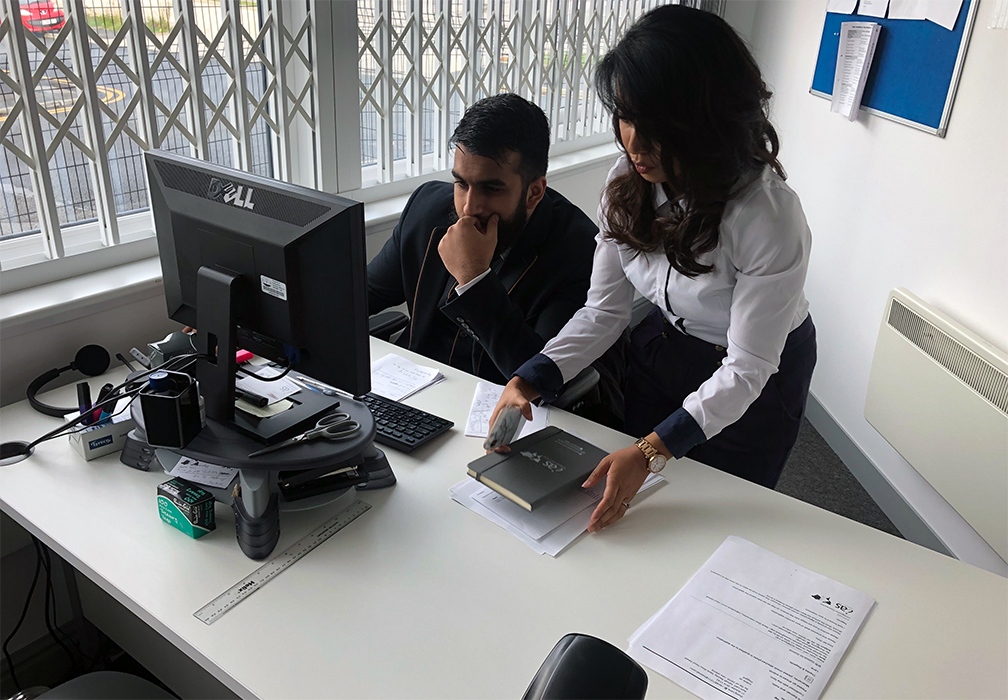
With our Application Package, your dedicated immigration lawyer will assess your case, prepare your application, check your supporting documents and submit your forms on your behalf.
We check your application for missing information, inconsistencies and potential issues before submission, helping you avoid common mistakes that could affect your case.
The Fast Track Package
Our Fast-Track Application Package gives your case priority with our immigration lawyers, helping you get your application prepared, checked and submitted as quickly as possible.
Your case receives priority handling, including accelerated document reviews, application preparation, communication with your caseworker and submission support.

The Appeal Package
Our immigration lawyers will review the decision, explain why it was refused and advise on the strongest option available to you, including an appeal, review or fresh application where appropriate.
We will examine the reasons for refusal, identify weaknesses or errors, assess your available options and provide the legal support and representation your case requires.
Related pages for your continued reading.
Frequently Asked Questions
Yes. To apply for naturalisation, you generally need 5 years of reckonable residence in Ireland, including at least 1 year of continuous residence immediately before applying. Stamp 3 time counts towards this requirement.
Stamp 3 is considered reckonable residence, which means that it is a valid and long-term residence permit. Therefore, if you wish to apply for citizenship, you can do so with the Stamp 3 immigration permission.
Each stamp number offers different immigration rights and has different immigration rules that you must abide by. Some stamps are more suited to family members of Irish citizens, whilst others are better suited to people working in specific fields, such as doctors, or students of an Irish university.
No, a Stamp 3 holder cannot work in Ireland. If you want to work, you must first get an employment permit (such as a Critical Skills or General Employment Permit) and then apply to change your permission to Stamp 1, which allows employment.
Yes, time spent on Stamp 3 counts as reckonable residence when calculating the residence requirement for naturalisation (citizenship) in Ireland.
No. Stamp 3 does not permit employment, self-employment, or any business activity. To work legally in Ireland, you must obtain a relevant employment permit, which will result in your permission being changed to Stamp 1.
Stamp 3 is usually granted for 1–2 years at a time, depending on your category. You must apply to renew your permission and re-register with ISD before the expiry date on your Irish Residence Permit (IRP) card.
Yes, since May 2024, the spouse or de-facto partner of a General Employment Permit (GEP) or Intra-Corporate Transferee (ICT) permit holder already living in Ireland on Stamp 3 can work without a separate employment permit. You do not need a new IRP card until your current one expires — use the ISD’s Stamp 3 to 1G employer notice in the meantime.
Yes. Stamp 3 is reckonable residence for naturalisation purposes. The standard requirement is 5 years of reckonable residence, including at least 1 continuous year immediately before applying.
Stamp 3 holders cannot sponsor family members to join them in Ireland on a long-term basis. Family reunification rights are linked to other permissions, such as Stamp 1 (employment permit holders) or Stamp 4 (long-term residents).

Clear, professional guidance.
Get clear, professional guidance for your immigration case.
Call Now Call To Discuss