
U.S. Family-Based Green Card Application from Canada
Family-Based Green Cards are immigration permission that allows foreign family members of U.S. citizens and permanent residents to travel and settle in the U.S.
For advice and assistance with your visa application, contact Total Law today at +1 844 290 6312 or use the online contact form to get in touch.
Page Contents
- What are the Family-Based Green Cards?
- Family-Based Green Card Categories
- Who is an Accompanying Relative?
- Documents Required to Apply for Family-Based Green Cards
- How to Apply for Family-Based Green Cards
- Application Cost for Family-Based Green Cards
- Application Processing Time
- How can Total Law help?
- Frequently Asked Questions
What are the Family-Based Green Cards?
Family-based green cards allow foreign family members of U.S. citizens and permanent residents to obtain a green card, settle and become lawful permanent residents in the U.S. Close relatives include your spouse, children, parents, and siblings; however, distant relatives like grandparents and cousins do not count.
If you are a U.S. citizen, you can bring more distant relatives to the U.S. than a U.S. permanent resident (green card holder). Similarly, foreign family members of U.S. citizens receive their green cards faster than foreign families of permanent residents.
The foreign family member is called the applicant, and the U.S. citizen or permanent resident is called a sponsor. When applying for family-based green cards, your sponsor must have to petition the U.S. Citizenship and Immigration Services (USCIS) on your behalf.
If the petition is approved, it will be sent to the National Visa Center (NVC). The NVC will send a package with information and instructions to the applicant in the foreign country.
"I'm very happy with the standard of training received on the OISC Level 1 course, i passed my exam. Thank you!"
Liam Calvert
Posted 6 years ago
"My application was approved and a huge weight has been lifted from our shoulders this year "
Akeel Lakar
Posted 6 years ago
"We used this service for the spouse visa extension application to assure that all the information was valid and correct."
Nabil Anwar
Posted 6 years ago
Family-Based Green Card Categories
Family-based green cards are divided into two categories, namely: the immediate relative category and the family preference category. The family-based green card category you will apply for depends on your relationship to a U.S. permanent resident or citizen.
Immediate Relative Category
There is no limit to the number of visas granted each year under this category for immediate relatives. You can apply for a family-based green card under the immediate relative category if you meet the following requirements.
- You are an unmarried child of a U.S. citizen under 21 years
- You are legally married to a U.S. citizen.
- You are a parent of a U.S. citizen older than 21 years.
If you meet the above requirements for the immediate relative category, you can apply for one of these visas.
- U.S. citizen spouses can apply for IR1 Visa
- IR2 Visa is for unmarried children of U.S. citizens under 21 years
- IR3 Visa is for children adopted abroad by U.S. citizens
- IR4 Visa is meant for children adopted in the U.S. by U.S. citizens
- Parents of U.S. citizens older than 21 years can apply for IR5 Visa
There is no limit to the number of visas granted each year under this category. Any Canadian citizen who falls under one of these categories is immediately eligible for a green card without having to wait for an immigrant visa to become available based on the priority date.
Family Preference Category
Under the family preference category of family-based green cards, applications might take long years to be approved. You can apply for the family preference category if you meet any of these requirements:
- You are a brother or sister of a U.S. citizen.
- Unmarried sons or daughters aged 21 years or older of a U.S. citizen.
- You are a married child (of any age) of a U.S. citizen.
- You are a spouse or unmarried child under 21 of a U.S. permanent resident.
If you meet the above requirements for the family preference category, you can apply for one of these visas:
- F1 Visa (First Preference) for unmarried children who are 21 years or older of U.S green card holders.
- F2A Visa (Second Preference) for spouses and minor children younger than 21 years of U.S. green card holders.
- F2B Visa (Second Preference) for unmarried children aged 21 years or older of U.S. green card holders.
- F3 Visa (Third Preference) for married children of U.S. citizens
- F4 Visa (Fourth Preference) for siblings of U.S. citizens who are age 21 years or older.
Who is an Accompanying Relative?
Accompanying relatives are also known as derivative beneficiaries. An accompanying relative is a spouse or unmarried children under 21 years of the primary applicant. They may be eligible for a family-based green card as accompanying relatives.
When applying for a visa petition, accompanying relatives must be included to help start the immigration process, after which they can change their status to permanent residents by submitting a separate application.
You can apply for a green card under the family preference relative category as a derivative relative. However, it is impossible to apply for a green card as an accompanying relative but rather after you have changed your status.
Documents Required to Apply for Family-Based Green Cards
When applying for family-based green cards, there are certain documents you need to submit to prove your eligibility. Whether you are applying for the family preference category or the immediate relative category, you need to submit the following documents:
- Passport, which must still be valid for at least six months after your planned arrival date in the U.S.
- Two coloured passport-sized photographs of you
- Medical examination form
- Birth certificate if you are applying as a child of a U.S. permanent resident or citizen
- Marriage termination document, if applicable
- A signed affidavit of support
- Marriage certificate if you apply as a wife or husband of a U.S. permanent resident or citizen.
It is important to note that all your documents must be written in English; if not, they must be translated into the preferred Language. However, there are cases where you might need to submit additional documents to strengthen your chances.
How to Apply for Family-Based Green Cards
Whether you are under the immediate relative or family preference category, you must follow the same application process to apply for your immigrant visa. These application processes are as follows:
Step 1: Your U.S. relative must fill out the file Form I-130 Petition for Alien Relative on your behalf and submit it to the USCIS.
Step 2: Once your Form I-130 has been approved, applicants (foreign family members) need to go through consular processing to proceed with the application process. Applicants must complete Form DS-261 and submit it to the U.S. Embassy.
Step 3: Pay the application fee
Step 4: Fill out Form DS-260, that is, the immigration visa application, and submit all the required documentation.
Step 5: Attend an in-person visa interview
However, applicants in the U.S. on a different visa will have to change their status, which means that you have to file Form I-485 to apply and register for permanent residence or adjust your status, which you will submit to USCIS.
In Canada, immigrant visas are processed at the U.S. Consulate General in Montreal. For more information on immigrant visas, please visit the State Department in Canada.
Application Cost for Family-Based Green Cards
The application fee is determined by the visa category and the country you are applying from. Regardless, you are to pay the following application fee.
- The filing fee for Form I-130, Petition for Alien Relatives, is $625
- The filing fee for Form I-485, Application to Register Permanent Residence or Adjust Status, is $1,440
- The filing fee for Form DS-261, Immigration Visa Application, is $325
- USCIS immigrant fee for immigrating to the U.S. as a lawful permanent resident is $235
There are other fees you may need to pay, like the medical and biometric fees and document translation fees, if applicable.
Application Processing Time
The application processing time is dependent on your visa category. If you apply under the immediate relative category, you will get your green card faster than those under the family preference category.
This is because immediate relative visa routes are always available with no limit. Family preference category visas can take years to be approved, as a specific number of applications can be approved per year. However, the annual caps on family preference visas are:
- 24,000 for F1 visas
- 79,940 for F2A visas
- 34,260 for F2B Visas
- 23,400 for F3 visas
- 65,000 for F4 visas
Once these limits have been reached, applications will be carried over until the visas become available again to be processed.

How can Total Law help?
Total Law’s excellent immigration lawyers are vastly experienced in dealing with U.S. family-based green cards. They provide an attorney-client relationship while also giving advice and support to make your application process smooth.
Our immigration lawyers will help you determine that you meet the eligibility criteria for U.S. family-based green cards and will advise you in detail on which supporting documentation you should have. In addition, years of experience with this process have made us aware of the common mistakes that applicant make that causes application refusal. Therefore, we will help you avoid these errors to ensure that your application is consistent and readily accepted.
If you’ve had a previous refusal, Total Law can help you file an appeal or walk you through the re-application process to ensure you get accepted. So contact us today at +1 844 290 6312 to start your successful U.S. visa application journey.

Advice Package
Get clear, expert advice on your visa options, eligibility and application before you commit to applying.

Application Package
Let our immigration lawyers prepare, check and manage your application so you can apply with confidence.

Fast Track Package
Need to apply quickly? Get priority handling by our immigration lawyers from preparation to submission.

Appeal Package
Been refused or received an unfavourable decision? Get expert legal help to challenge it or determine your next step.

The Advice Package
During this Advice Session, an immigration lawyer will assess your circumstances, explain your options and tell you what you need to do to make a strong application.
We review your circumstances, explain the relevant requirements, identify potential problems or refusal risks, and advise you on the evidence and next steps.

The Application Package
With our Application Package, your dedicated immigration lawyer will assess your case, prepare your application, check your supporting documents and submit your forms on your behalf.
We check your application for missing information, inconsistencies and potential issues before submission, helping you avoid common mistakes that could affect your case.
The Fast Track Package
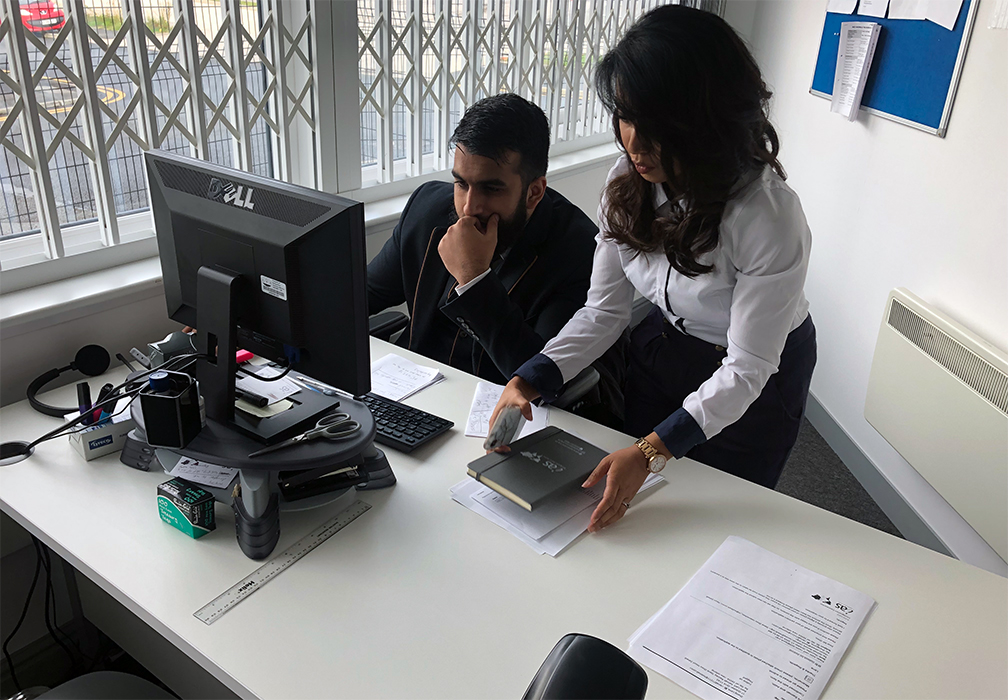
Our Fast-Track Application Package gives your case priority with our immigration lawyers, helping you get your application prepared, checked and submitted as quickly as possible.
Your case receives priority handling, including accelerated document reviews, application preparation, communication with your caseworker and submission support.

The Appeal Package
Our immigration lawyers will review the decision, explain why it was refused and advise on the strongest option available to you, including an appeal, review or fresh application where appropriate.
We will examine the reasons for refusal, identify weaknesses or errors, assess your available options and provide the legal support and representation your case requires.
Related pages for your continued reading.
Frequently Asked Questions
Whether you are applying under an immediate relative or family preference category, you must have a U.S. sponsor who will sponsor you financially. For your U.S. sponsor to be qualified, they must have a minimum of 125% of the Federal Poverty Guidelines and be able to prove that they can support you financially after arriving in the U.S.
In essence, you can’t apply for a family-based green card without a U.S. sponsor because they will be the ones to initiate the application process.
Once your family-based green card application has been approved, you will be permitted to travel and live in the U.S. as a lawful permanent resident. This permit allows you to live, work or study permanently in the U.S. without immigration restrictions.
With a family-based green card, you can travel outside the U.S. and re-enter the U.S. anytime without losing your status. If you have been in the U.S. as a permanent resident for more than five years or three years, if you are married to a U.S. citizen legally, you can apply for United States citizenship.

Clear, professional guidance.
Get clear, professional guidance for your immigration case.
Call Now Call To Discuss