
Germany Visa from the USA
US citizens can visit Germany visa-free for up to 90 days in any 180 day period. This applies to other non-EU, non-EEA and non-Swiss nationals, though some nations require a Schengen visa. US citizens cannot work, or plan to reside in Germany visa-free. Living and working in Germany requires the appropriate German residence permit consistent with your purpose of stay.
At Total Law, our visa lawyers help you to plan your move to Germany. We support applicants with eligibility and options advice, application and document-checks, as well as full residency and relocation planning. Contact an immigration lawyer today to discuss the Germany visa application requirements and processes. Our lawyers can assist over the phone or online. Call us on +44 (0) 333 305 9375 or contact us online for immediate assistance.
Do Americans Need A Visa for Germany from USA?
Germany is a Schengen country, and the USA is part of the Schengen visa waiver program. Therefore, Americans do not need a visa and enjoy visa-free travel to Germany and other Schengen member states from USA for up to 90 days every six months. You may need a visa for short-term visits to Germany from the US if:
- You’ve previously been denied entry into the Schengen Area.
- You’re not a US citizen, although you’re a resident of the US and your home country is not on Germany’s visa-free travel list
When the system becomes effective in 2026, Americans and persons of other nationalities currently enjoying visa-free entry to the Schengen Area will need an ETIAS to enter the region. The ETIAS is an electronic travel authorization granting foreign individuals from countries in the Schengen visa waiver agreement entry to the Schengen Zone.
You’ll also need a visa if you intend to stay in Germany for more than three months. The appropriate visa depends on your purpose of entry and the intended duration of stay. A German Long-stay visa also allows freedom of movement within the Schengen Zone.
Page Contents
- Do US Citizens Need A Visa for Germany?
- Can a Green Card Holder Travel to Germany Without a Visa?
- Who Can Apply for a German Visa from the US?
- Types of Germany Visas Available from the USA
- Where to Apply for a German Visa in the USA
- How to Apply for a Germany Visa from the US
- Requirements to Apply for a German Visa from the US
- Financial Requirements
- Insurance Requirements
- Photo Requirements
- Language Requirements
- Germany Visa Application Form
- How Long Does it Take to Get a German Visa from USA?
- Germany Visa Application Cost in the US
- How Can Total Law Help?
- Frequently Asked Questions
"I'm very happy with the standard of training received on the OISC Level 1 course, i passed my exam. Thank you!"
Liam Calvert
Posted 6 years ago
"My application was approved and a huge weight has been lifted from our shoulders this year "
Akeel Lakar
Posted 6 years ago
"We used this service for the spouse visa extension application to assure that all the information was valid and correct."
Nabil Anwar
Posted 6 years ago
Can a Green Card Holder Travel to Germany Without a Visa?
A US Green Card does not automatically grant you visa-free entry to Germany and the Schengen Area. The entry requirements for Green Card holders and US temporary residents depend on their nationalities and specific circumstances.
If you’re a legal resident of the US (whether temporary or permanent), you can travel to Germany without a visa if:
- You’re a national of a country in a visa-liberalization agreement with the US.
- You have dual citizenship, and one of your countries of nationality is an EU/EEA member state – in this case, you must travel with your EU passport.
- You have dual citizenship, and your second country has a visa-free agreement with the EU – in this case, you must travel with the passport of your visa-exempt country.
US residents from countries excluded from the EU visa-waiver program must apply for a visa to enter Germany whether they hold a green card or temporary resident permit.
US nationals and residents coming to Germany for long-term work, visa, or permanent relocation must obtain a type D German national visa.
Who Can Apply for a Germany Visa from the US?
You can apply for a German entry visa from the US if:
- You’re a legal resident of the US, but you are a national of a country that does not have a visa-free agreement with Germany. Your US residency must be valid for at least three months after your intended duration of stay in Germany.
- You’re a US citizen or national of a visa-exempt country previously denied entry into the Schengen Area.
If you fall into any of the above categories, you should apply for a Germany Schengen visa if:
- You’ll only be visiting Germany.
- Germany is your primary destination. If you intend to visit more than one country in the Schengen Zone, you must plan to stay longer in Germany. You cannot obtain a German Schengen visa if you intend to spend more time in another Schengen State. In that case, you should apply for that country’s visa and include Germany as a secondary destination.
Foreigners in the US on tourist, visitor, or summer work visas cannot apply for a Germany entry visa from the US. They must apply from their country of residence.
Types of Germany Visas Available from the USA
Overview
There are several types of German visas available to US residents, depending on the purpose of visit and the duration of stay. Based on the duration of stay, there are two main categories of Germany visa:
- Short-stay Schengen Visa (Type C)
- Long-stay National Visas (Type D)
Short-Stay Visas for Germany (Schengen Type C visas)
The Type C Schengen visa is issued to US residents who do not qualify for visa-free entry for short visits of less than 90 days. The Short-stay visa types available to US residents include:
- Airport Transit Visa: For persons transiting through German airports en route to a destination outside the Schengen Area.
- Business Visa: For US residents visiting Germany for short-term business-related activities.
- Tourist/visitor Visa: For persons coming to Germany for tourism and sightseeing purposes or to visit family members.
- Medical Treatment Visa: For persons visiting Germany to receive medical treatment.
- Short-term Study Visa: For persons taking short-term courses (less than three months) in a German education institution.
- Cultural, Sports, or Religious Events Visa: For persons visiting Germany to attend cultural, religious, or sports festivals.
- Trade Fair & Exhibitions Visa: Germany hosts most of the world’s largest trade exhibitions. The trade fair and exhibitions visa is for persons participating in a trade exhibition in Germany.
- Germany Visa for Official Visits: For members of official delegations undertaking an official trip to Germany.
Long-Stay Visas for Germany (Type D visas)
If you want to live and work in Germany for longer than three months or relocate permanently to Germany, you must apply for a Type D national visa or residence permit. There are different types of German long-stay visas.
The types of German national visas include:
- Skilled worker visa: For highly qualified professionals moving to Germany for long-term employment purposes, especially in shortage occupations. Holders of this visa are usually eligible for an EU Blue Card.
- Employment Visa: For non-EU/EEA/Swiss nationals coming to Germany for long-term work.
- Job Seeker Visa: For professionals with recognized qualifications entering Germany to seek employment. It is valid for up to six months.
- Family Reunification Visa: For persons moving to Germany to reunite with a family member who is a German national or legal resident.
- Germany Study Visa: For non-EU nationals pursuing a degree or professional course in a German educational institution.
- Self-employment Visa: For entrepreneurs with viable business ideas who want to start or expand their businesses into Germany.
- Visa for Vocational Training: For persons seeking vocational training in Germany.
- Training/Internship Visa: For persons entering Germany to undertake a training/internship as part of a professional training course or a government exchange program.
The specific visa type you’ll need depends on your purpose of entering Germany. You’ll be issued a visa bearing your purpose of entry. The visa is usually valid for up to six months, and you’ll need to apply for a corresponding residence permit upon entering Germany, guaranteeing your long-term stay. You must obtain the resident permit before your visa expires, or you may have to leave Germany and re-apply for a visa.
Where to Apply for a Germany Visa in the USA?
Germany’s US consulates (except the Consulate General in Atlanta) have outsourced their Schengen visa application process to BLS International. BLS has several visa application centers in the US, and you’re to apply for a German visa at the one closest to your residence in the US.
A designated member of staff will receive your application details at the application center and take your biometric data. The information will be registered on their Visa Information System (VIS) and sent to the German consulate for processing and decision-making. Your information will remain on the VIS for up to five years and can be used for subsequent visa applications to the Schengen Area.
If you reside in Atlanta and its surrounding areas, you can submit your application directly to the office of the German Consulate General in Atlanta. However, you must first make an appointment via the online appointment system of the German Consulate General in Atlanta.
The BLS visa application centers in the US and their respective jurisdictions are as follows.
- BLS Application Center in Washington DC covers Delaware, the District of Columbia, Maryland, West Virginia, and Virginia residents.
- BLS Application Center in Boston covers Connecticut (excluding Fairfield County), Maine, Massachusetts, New Hampshire, Rhode Island, and Vermont.
- BLS Application Center in New York covers Bermuda (British overseas territory), Fairfield County in Connecticut, New York, New Jersey, and Pennsylvania.
- BLS Application Center in Chicago covers Illinois, Indiana, Iowa, Kansas, Kentucky, Michigan, Minnesota, Missouri, Nebraska, North Dakota, Ohio, South Dakota and Wisconsin.
- BLS Application Center in Houston covers Arkansas, Louisiana, New Mexico, Oklahoma, and Texas.
- BLS Application Center in Los Angeles covers Imperial, Kern, Los Angeles, Orange, Riverside, San Bernardino, San Diego, San Luis Obispo, Santa Barbara, and Ventura counties in California, Arizona, Colorado, Nevada, and Utah.
- BLS Application Center in Miami covers Florida, Puerto Rico, and the American Virgin Islands.
- BLS Application Center in San Francisco covers all remaining counties of California, Alaska, Hawaii, Idaho, Montana, Oregon, Washington, Wyoming, and the American overseas territories.
How to Apply for a Germany Visa from the US: Application Process
The steps to applying for a German visa from the US are as follows:
- Determine the appropriate visa type: The type of visa you need depends on your purpose of coming to Germany. This step is very important as it will determine the exact visa you need to apply for and the documents that will be required of you.
- Find your application center: You must submit your application for a German Schengen visa through BLS International. Locate the BLS International Visa Application Center covering your area of residence.
- Schedule an appointment with the BLS Application Center: After determining the nearest BLS Application Center, create an account on BLS’ website and book a visa appointment. Since BLS is a third-party service provider, you’ll have to pay a service charge and other optional service fees.
- Gather the required documents: Prepare all relevant supporting documents for your visa appointment. It’s essential to start gathering your documents early so it can be ready before the day of your visa appointment.
- Submit your visa application: Go for your appointment at the BLS visa application center and submit your completed application form and the supporting documents. You’ll also submit your biometric information and answer some questions about your trip during this appointment.
- Pay the visa application fee: You must pay the visa fee stipulated by the German embassy to process your application. You’ll make the payment when submitting your application.
- Track your application: You can track your application status through the BLS website or opt for SMS alerts while booking your visa appointment.

Requirements & Documents for Germany Visa Application from the USA
Overview
You must submit the original and two copies of the following documents when applying for a German in the US:
- Completed and signed application form: You can download the form from the official website, print it, and fill it out. Ensure you meticulously fill out the form to avoid mistakes or omissions that could result in rejection.
- Valid passport: You must have a passport or travel document issued within the last ten years and valid for up to three months after your expected return date to the US.
- Two recent photographs: You’re to provide two passport-size photographs in line with Schengen photo ID requirements. The photos must be at most six months old.
- US residence permit: Green card or other residence permit authorizing you to reside in the US legally.
- Proof of residency: You must submit evidence that you live in the US, such as utility bills or rent receipts.
- Proof of accommodation in Germany: Hotel reservations, rental agreement, or letter of invitation to prove that you have a place to stay in Germany.
- Travel arrangement details: You must submit your travel itinerary, including flight reservations.
- Travel health insurance: Proof of a comprehensive medical insurance policy covering your stay in the Schengen Zone. Your insurance must have a minimum coverage of €30,000.
- Proof of sufficient financial means: You must provide recent bank statements as evidence of adequate funds to support your stay in Germany. If someone sponsors your trip, you must submit a copy of your sponsorship letter.
- Cover letter: You’re to provide a cover letter covering all the details of your travel, including your purpose of visit, intended duration of stay, travel dates, and accompanying persons (family members, business associates, or friends).
- Proof of civil status: A marriage certificate, civil partnership registration, or children’s birth certificate.
- Declaration of Accuracy: You must submit a signed declaration of accuracy alongside your application.
- Proof of Germany visa fee payment: While submitting your application, you must attach the receipt showing you have paid the required application fee.
Other Required Documents
You may need to provide additional documents based on your employment status and reasons for visiting Germany. They include:
- If you’re employed,
- An employment contract.
- A letter of consent/leave from your employer.
- A certificate of income tax.
- If you’re unemployed,
- A notarized letter of sponsorship from your financier taking full responsibility for your trip.
- A copy of their valid passport.
- At least three recent bank statements.
- If you’re self-employed,
- A copy of your business license.
- Recent company bank statements.
- Income Tax Returns.
- If you’re retired
- Proof of pension – pension statements for the last six months.
- If you’re a student
- Valid I-20 to prove student status.
- Letter of reference from your educational institution in the US.
- If visiting family members
- Letter of invitation from your host in Germany.
- Proof of relationship with your host.
- A copy of their passport/residence permit.
- “Declaration of Commitment” signed by your host.
- If visiting for medical purposes
- A medical report from your doctor indicating you need to go to Germany for treatment.
- Confirmation of your medical appointment by the German health institution.
- Payment receipts for medical treatment.
You must provide certified translations of documents in languages other than German and English. You may need to get an Apostille stamp or legalization for some documents.
Additional Germany Visa Requirements For Minors
You must also provide the following documents when applying for a minor.
- Original birth certificate.
- The Germany visa application form with the signatory of both parents.
- Original passports of both parents.
- Proof of custody if parents are separated and only one has custody.
- The parents/legal guardians must sign a notarized consent letter to travel if the child will travel alone. If one parent resides outside of the US, they should submit their signed consent letter to the German diplomatic mission in their country of residence.
Germany Visa Financial Requirements
How much money is required to prove financial stability on a German visa depends on the visa type and the length of your stay. However, it is advisable to go by the rule that a person should be able to prove they have a minimum of €45 (approx. $51) per day to spend during their stay in Germany.
Financial means can be shown via proof of sponsorship or bank statements.
The German authorities must be aware that the applicant has the amount required. This is simply so that the authorities can be sure that the applicant will not be a financial burden after they enter the country.
Insurance Requirements For Germany Visa
Those who have a mandatory visa requirement to enter the Schengen area will need to take out private health insurance or statutory health insurance to reside in Germany.
Health insurance regulations are different for guest workers, students, and immigrants, however.
Germany Visa Photo Requirements
When a person applies for a German visa, they will need to submit photographs of themselves that adhere to the government guidelines. The requirements are as follows:
- The photo should be 35x45mm (1.37×1.77 inches) in size
- The photo should be recent (no older than 6 months)
- The applicant’s face should take up 70–80% of the image
- A full frontal view of the face should be displayed
- The photo should be of high quality and accurately represent the person’s true appearance
- The background should be light gray
- The photo should be sharp in focus, properly contrasted, and clear
- Red eyes, reflections in the images, and shadows across the face are not accepted
- The lighting must be even
- The image must be on high-quality paper
- The print resolution must be at least 600 dpi
- The applicant must provide at least 2 of the same images
Language Requirements For German Visa
The language requirements for a German visa will depend on the specifics of the visa. For example, there is no language requirement for a tourist visa. However, student visas may benefit from German, even though there is no specified requirement.
Business visas often require a level of German proficiency, as do visas to join a family member in Germany. These people will need to prove they have a sufficient level of German to have everyday interactions.
Germany Visa Application Form
Every type of visa requires a specific application process. Short-stay and long-stay visas have different processes and different forms, as do business visas, tourist visas, and family visas.
To apply, applicants should follow these steps:
- Find out the visa type needed.
- Check where to apply.
- Fill out the relevant application form and collect the visa requirements and documents.
- Schedule your visa interview.
- Attend the interview at the appropriate Embassy or Consulate.
- Await a response.
How Long Does it Take to Get a German Visa from USA?
German visa application processing time in the United States is two to four weeks. There may be delays if the German consulate requests additional supporting documents.
To prevent delays, start your application at least eight weeks before your intended travel but not more than three months earlier. You’ll be notified once a decision is made on your application.
Germany Visa Application Cost in the US
The German mission charges a non-refundable fee for German visa applications. The costs vary for different categories of persons. It must be paid in cash when submitting your visa application, as the German mission does not accept cheque or credit card payments.
German Schengen Visas will vary in cost. A German Schengen visa will cost:
- €90 for adults for a short-stay visa
- €75 for adults who apply for a long-stay visa
- €45 for children under 12 years of age
- Children under 6 years of age are free
BLS International, the authorized third-party agency for processing German visas from the US, also charges a basic service fee of $42.
Some categories may be exempt from paying fees or pay a lower amount. However, it is also worth taking into account the costs of travel insurance, obtaining copies of documents and translations, as well as flights, and showing you are financially capable.
How Can Total Law Help?
With an estimated approval rate of 93%, getting a visa to Germany is much easier if you are applying from the USA. While the United States is one of the countries that has a visa liberalization agreement with Germany, US nationals might still need a visa to enter Germany, depending on the purpose and duration of their stay. Moreover, legal US residents who are nationals of other countries must apply for a visa before they can be allowed into the country. This is why residents and citizens must be familiar with the application process and visa requirements to enter Germany.
Applying for a German visa from the US is quite straightforward, but collecting the relevant supporting documents might be daunting.
You’ll need professional guidance to prevent delays in your application, as a mistake can cause the German mission to reject your application. Total Law Germany immigration experts can guide you through the application process and help you gather relevant supporting documents to prevent delays in obtaining your visa.
We can help you anytime in person, over the phone, or online. Reach us at +1 844 290 6312 or online to speak with one of our Germany immigration experts for immediate assistance.

Advice Package
Get clear, expert advice on your visa options, eligibility and application before you commit to applying.

Application Package
Let our immigration lawyers prepare, check and manage your application so you can apply with confidence.

Fast Track Package
Need to apply quickly? Get priority handling by our immigration lawyers from preparation to submission.

Appeal Package
Been refused or received an unfavourable decision? Get expert legal help to challenge it or determine your next step.

The Advice Package
During this Advice Session, an immigration lawyer will assess your circumstances, explain your options and tell you what you need to do to make a strong application.
We review your circumstances, explain the relevant requirements, identify potential problems or refusal risks, and advise you on the evidence and next steps.

The Application Package
With our Application Package, your dedicated immigration lawyer will assess your case, prepare your application, check your supporting documents and submit your forms on your behalf.
We check your application for missing information, inconsistencies and potential issues before submission, helping you avoid common mistakes that could affect your case.
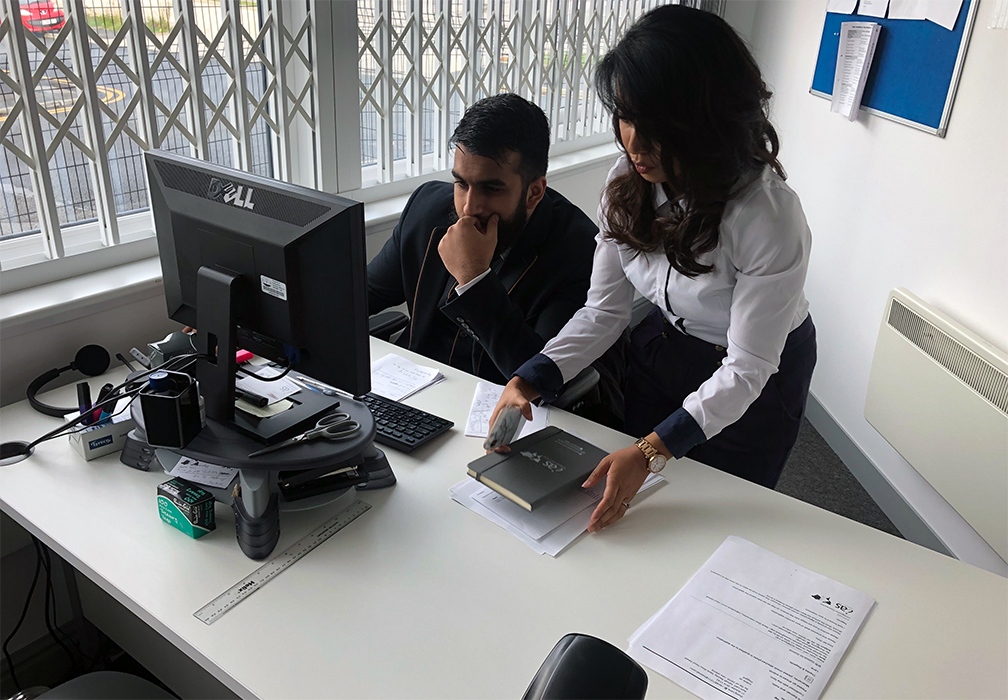
The Fast Track Package
Our Fast-Track Application Package gives your case priority with our immigration lawyers, helping you get your application prepared, checked and submitted as quickly as possible.
Your case receives priority handling, including accelerated document reviews, application preparation, communication with your caseworker and submission support.

The Appeal Package
Our immigration lawyers will review the decision, explain why it was refused and advise on the strongest option available to you, including an appeal, review or fresh application where appropriate.
We will examine the reasons for refusal, identify weaknesses or errors, assess your available options and provide the legal support and representation your case requires.
Related pages for your continued reading.
Frequently Asked Questions
Yes, a US citizen can live and work in Germany. However, they must first obtain a residence permit or work visa via the skilled worker visa or other employment routes.
You need to have at least €45 (approximately $51) for each day of your stay in Germany. You must provide proof of sponsorship or proof via your bank statements. This is to let the German authorities know you won’t be a financial burden when you enter Germany.
American citizens only need a valid passport for a short visit to Germany. However, if you are staying in Germany longer than 90 days, you will need to have the appropriate visa for the purpose of your stay in Germany.

Clear, professional guidance.
Get clear, professional guidance for your immigration case.
Call Now Call To Discuss