
German Citizenship
There are currently 45 million people in the US with German ancestry. However, this is one of several pathways to German citizenship, and you should apply for the one that best fits your circumstances.
Any application to get a new citizenship will be challenging, and getting help from an immigration lawyer or advisor can provide the highest possible chances of success. If you want help from Total Law, please call us at +1 844 290 6312 or visit us online to find out what services we offer.
Advantages of German Citizenship
Before you get German citizenship, you will need to decide whether the benefits are worth the substantial amount of effort it will take. The main benefits to be aware of are listed below:
- You will have the right to vote in state and local elections. You can even run as a candidate for any elected position.
- Freedom of movement within the Schengen Area.
- Access to the fourth-highest ranked passport in the world with access to 159 countries visa-free.
- Ability to work in one of the most productive economies in the European Union without needing a visa.
- Permanent residency in Germany without needing a permit or visa.
- It will be easier for your family to join you.
- You will have German consular protection while you are in a foreign country.
- You can become a civil servant.
Page Contents
- Advantages of German Citizenship
- Responsibilities of German Citizenship
- German Citizenship by Naturalization
- German Citizenship by Marriage
- German Citizenship by Descent
- German Citizenship by Ancestry
- Applying for German Citizenship
- Reasons for Denial of German Citizenship
- How Can Total Law Help?
- Frequently Asked Questions
"I'm very happy with the standard of training received on the OISC Level 1 course, i passed my exam. Thank you!"
Liam Calvert
Posted 6 years ago
"My application was approved and a huge weight has been lifted from our shoulders this year "
Akeel Lakar
Posted 6 years ago
"We used this service for the spouse visa extension application to assure that all the information was valid and correct."
Nabil Anwar
Posted 6 years ago
Responsibilities of German Citizenship
To access all of these great opportunities associated with German citizenship, you must always fulfill the following obligations and responsibilities:
- Be a law-abiding German citizen by following local and federal laws
- Serve if you are called upon for civilian service or to provide assistance during emergencies
- Uphold the values of the German Constitution (Basic Law)
- Environmental responsibility. Germans are expected to follow guidance to reduce their impact on the planet
Germany does not have mandatory voting, so you are not obliged to participate in German democracy. However, this is a key responsibility that the majority of German citizens carry out.
German Citizenship by Naturalization
You won’t have to have family connections to Germany if you manage to get citizenship by naturalization. All you have to do for naturalization is have lived in Germany as a law-abiding resident for a long enough time. The primary requirements to get German citizenship by naturalization are as follows:
- You have legally lived in Germany with a residence permit for eight years or for seven years if you attended an integration course. “Special integration circumstances” will reduce this time further to six years.
- Have German language proficiency at the B1 level according to the Common European Framework of Reference for Languages (CEFR). This is the intermediate level, indicating you are comfortable in everyday conversation.
- You have been law-abiding and have no criminal record.
- You have the required finances and income to support yourself and your family without requiring help from the state.
- You have passed a citizenship test.
- You have renounced your previous nationality.
To prove your financial situation, you should provide bank statements that will display your current financial stability.
German Citizenship by Marriage
German Citizenship by marriage is an opportunity for you to start a new life permanently in the country with your spouse. You will still need to meet all of the basic requirements for naturalization to become a German citizen. However, you will also need to meet certain requirements related to your marriage, including the following listed below:
- Your marriage is legally recognized in Germany
- You can prove your marriage, such as through a marriage certificate
- You have been married for at least two years when you make your application
- You have a valid residence permit
The main advantage of this form of citizenship is that your period of naturalization will be substantially shorter. You will need to have lived in the country for just three years if your partner was born a German national. Meanwhile, it will be four years if your partner is naturalized in Germany.
German Citizenship by Descent
Beyond naturalization, you can get German citizenship by Descent (Jus Sanguinis), meaning right of blood. This applies if you have at least one German parent and they registered your birth before you turned one year old. This also applies if you have adoptive German parents, but they can register the adoption anytime before you turn 18, so long as this was on or after January 1st, 1977.
Another factor to be aware of is that you may be ineligible if your parents are divorced. In this case, the German citizen parent must continue to recognize you as their child under German law.
Furthermore, the rules are more stringent for children with parents born after January 1st, 2000. In this case, the child cannot become a German citizen if they were born in a foreign language, although this is waived if the child would otherwise be stateless.
German Citizenship by Ancestry
Overview
Ancestry is a less direct form of Jus Sanguinis citizenship in Germany. The exact rules on what classes as ancestry have changed over the years with alterations in German nationality laws. Therefore, to discover if you are eligible, you will need to properly research your family tree to work out which family members were German and work out what the rules were at that time.
If your ancestor was born in wedlock, they will be considered a German citizen if the following applies:
- They were born after January 1st, 1975, with at least one German parent. This can be a German mother or father
- They were born before January 1st, 1975, and had a German father. They will also be a German citizen if they had only a German mother and would have been considered stateless otherwise
Meanwhile, the following rules apply if the child was born out of wedlock.
- They were born after January 1st, 1914, to a German father.
- They were born after January 1st, 1933, to a German father or mother.
Restoring Ancestors’ Lost German Citizenship
In some cases, your ancestors may have previously lost their German citizenship due to persecution under Nazi rule in the 1940s. For instance, many Jewish people were forced to flee the country due to the Holocaust and had to forfeit their nationality, and many others were stripped of German citizenship after their names were listed in the Riechsgesetzblatt (Reich Law Gazette). The same applies to ancestors who were unable to become a German citizen due to gender discrimination at the time.
Due to the new Nationality Act, introduced in August 2021, you may now be able to become a German citizen as the ancestor of someone who had German citizenship taken away.
To reclaim German citizenship for yourself or your ancestor, if it has been lost in this way, you will need to make a request to the German Federal Office of Administration. If you or your ancestor meets the requirements to become a German citizen and have had it wrongfully taken away, you will be given a certificate of acquisition of German citizenship by Declaration.
Applying for German Citizenship
Overview
If you have German citizenship by ancestry or descent, you will often get automatic German citizenship. If you don’t have citizenship applied to you automatically, you may be able to make a request to the German Federal Office of Administration.
However, in some cases, particularly with those who become a German citizen by naturalization, you will need to pass a stringent citizenship test. This section covers how this application process works, detailing each of the following processes:
- Application Form
- German Naturalization Test
- Paying Naturalization Fees
- Submitting Documentation
- Wait for Processing
Getting and Completing an Application Form
The first step is to get the application form. To do this, you will need to ask for one from one of the following destinations, depending on where you live:
- A local immigration office
- The city council
- A regional district office
- The town council
- Any other relevant local authority
Alternatively, applications to be a German citizen by descent or ancestry may come from outside of Germany. In this case, you can apply at your closest German embassy or consulate.
Then, you will need to complete and sign the application form. This will require you to enter your personal information, explain your immigration history in Germany, and show you fit the requirements for citizenship by naturalization.
Passing the German Citizenship Test
Many pathways to becoming a German citizen will need you to display that you have an understanding of German ways of life by successfully passing a citizenship test.
The test will include 33 multiple-choice questions on living in Germany, society, rules, and laws. The questions will be divided between national questions and locally specific questions. To pass, you need to answer 17 questions correctly. Make sure that you practice the test online first so that you are prepared for the common questions.
Some groups will be exempt from having to take the citizenship test, including the following:
- Those unable to take the test due to old age, disability, or illness
- Those under 16 years old
- Those with a degree from a German university in politics, social sciences, or law.
Submit Documentation
Each type of German citizenship will require you to submit different documents. The main types of documentation are listed below:
- Form F is for those over 16 years old, and Form FK is for those who are older.
- Appendix V and proof of your ancestors’ or parents’ German citizenship if you are applying for citizenship by descent.
- A copy of your foreign passport.
- A copy of your resident permit if you are currently in Germany.
- Proof of your current nationality.
- Custody documentation for children under 16 years old.
- Proof of marriage, such as marriage certificates, if you are applying for citizenship by marriage.
Those applying to be German citizens by descent or ancestry, you will need to provide documents relating to your German ancestors or parents. The following are permissible:
- Proof of your relationship: birth certificates, marriage certificates, or family register documents.
- Proof of German citizenship or residence: passports, identity cards, and residency permits or cards.
Pay the Naturalization Fees
Across the application process, you will have to pay a range of fees for your application to be successful. Failure to pay the fees will result in your application being rejected. The following fees apply:
- Application form: 255 euros for adults and 51 euros for children under 16 years old.
- Naturalization test: 25 euros.
- Citizenship certificate after you have had a successful application: 25 euros.
Wait for Processing
German citizenship applications take a different amount of time, depending on the type of application you are making. Generally, the processing times have gotten longer in recent years.
The longest type is for German citizens by naturalization. You can expect the Federal Administration Office to take up to two years to complete the processing, although this will vary depending on how overloaded they are when you submit your application.
Furthermore, your application will take longer if there are issues with it, such as missing documentation. The Federal Administration Office will have to take the time to clarify any issues with you, which can take a substantial amount of time.
Reasons for Denial of German Citizenship
Overview
Even if you have been legally resident in Germany for the correct amount of time or you have German parents or ancestors, your application may still be rejected. The reasons listed below are the most common ones to be aware of:
- You have incorrectly calculated the amount of time that you have been living in Germany. Some applicants fail to add long-term residency periods, such as as a student, or they incorrectly include short-term periods in the country.
- You won’t be able to support yourself and your family in Germany, or you fail to provide sufficient evidence.
- You have a serious conviction on your criminal record. However, minor offenses should not impact your ability to get German nationality.
- You have relied upon state assistance previously in Germany.
- You failed to pay the proper taxes while resident in Germany.
- You are considered a risk to the safety of German citizens or residents. For example, you are affiliated with terrorist or criminal groups.
Alternatively, you may have made errors in your application. This will mean that your application will be rejected even though you may have been eligible for German nationality. Common errors include the following:
- You submit invalid documents
- There are discrepancies, or you submitted false information
- Your application does not account for all the requirements
- You fail to respond to requests for further information
What Happens If My Application is Rejected?
If any of these factors apply to your application, it is likely that it will be rejected. In this case, you will receive a formal letter from the authorities explaining the reasoning behind the rejection.
You will be allowed to reapply if you think you can deal with the application’s issues. However, if you think your application has been wrongfully rejected, you should consider appealing the decision.
How Can Total Law Help?
Opportunities to get German citizenship come in many forms, including through marriage, birth, descent, ancestry, and naturalization. Each of these options comes with different challenges for your application for German citizenship. However, it is well worth the effort to give you access to a tremendous economy and one of the world’s best passports.
Due to the complexities of applying for German citizenship, many people choose to get help from an immigration lawyer and advisor like Total Law. We can help you to understand what the best pathway to citizenship is for your unique circumstances before helping you to complete and submit your application. We can then liaise with the Federal Office of Administration to keep you updated on the progress of your application.
If you decide to get help from Total Law, please call us at +1 844 290 6312 to be connected with a member of our expert team. Alternatively, you can visit us online to find out the services we offer to German nationality applicants.

Advice Package
Get clear, expert advice on your visa options, eligibility and application before you commit to applying.

Application Package
Let our immigration lawyers prepare, check and manage your application so you can apply with confidence.

Fast Track Package
Need to apply quickly? Get priority handling by our immigration lawyers from preparation to submission.

Appeal Package
Been refused or received an unfavourable decision? Get expert legal help to challenge it or determine your next step.

The Advice Package
During this Advice Session, an immigration lawyer will assess your circumstances, explain your options and tell you what you need to do to make a strong application.
We review your circumstances, explain the relevant requirements, identify potential problems or refusal risks, and advise you on the evidence and next steps.

The Application Package
With our Application Package, your dedicated immigration lawyer will assess your case, prepare your application, check your supporting documents and submit your forms on your behalf.
We check your application for missing information, inconsistencies and potential issues before submission, helping you avoid common mistakes that could affect your case.
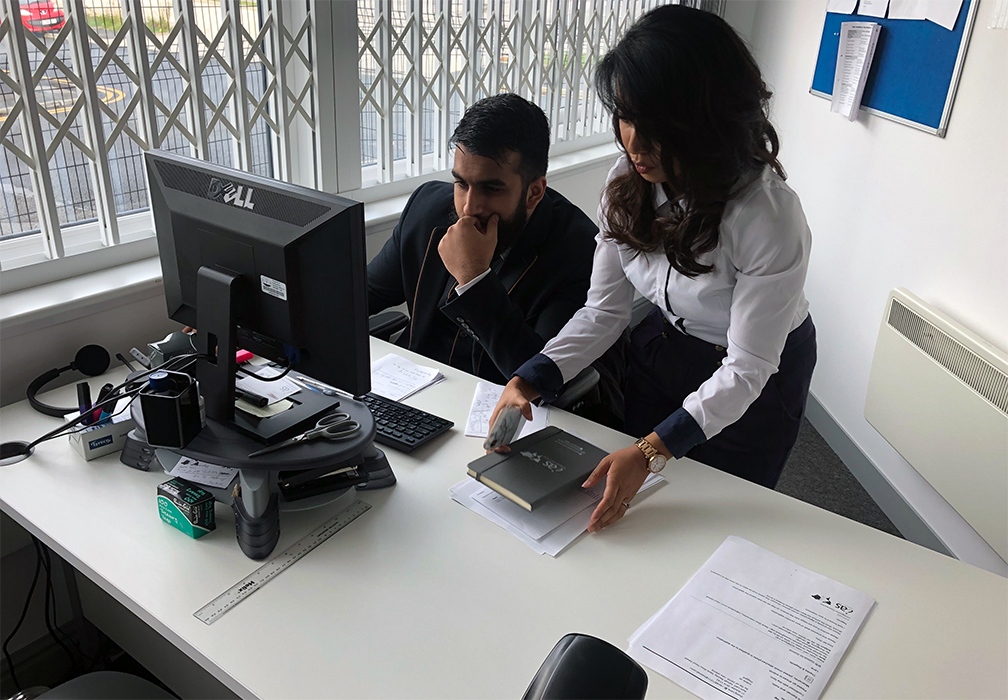
The Fast Track Package
Our Fast-Track Application Package gives your case priority with our immigration lawyers, helping you get your application prepared, checked and submitted as quickly as possible.
Your case receives priority handling, including accelerated document reviews, application preparation, communication with your caseworker and submission support.

The Appeal Package
Our immigration lawyers will review the decision, explain why it was refused and advise on the strongest option available to you, including an appeal, review or fresh application where appropriate.
We will examine the reasons for refusal, identify weaknesses or errors, assess your available options and provide the legal support and representation your case requires.
Related pages for your continued reading.
Frequently Asked Questions
In rare cases, having foreign parents who were legally resident in Germany but were citizens of a foreign country when you were born in Germany will allow you to be granted German citizenship.
The requirement is that at least one of your parents needs to have been legally resident in Germany for eight years and have had a permanent residence permit when you were born.
Some pathways to citizenship will require you to prove that you have German language skills, usually at least B1 on the CEFR scale. The following documents can be used to prove that you have obtained this level:
- A German language certificate such as the Zertifikat Deutsch
- A certificate for passing an integration course, such as the DTZ German Test for Immigrants
- A certificate for completing German secondary school
- Proof of admission into upper secondary school
- A certificate for passing at least four years of German classes in school
- Your degree certificate for a qualification completed in German
Not all applicants will be able to provide one of these documents. However, you can also take a government language test administered by a local citizenship authority.

Clear, professional guidance.
Get clear, professional guidance for your immigration case.
Call Now Call To Discuss