
Spain Visa for Filipino Citizens
When you are planning to visit Spain from the Philippines you will need to decide which available visa option is right for you.
Depending on your circumstances, it can feel tricky to know which visa category is the best option for your travel plans. Seeking the support of a Spain-Philippines visa expert can help you feel secure in your decision. Our team of immigration lawyers at Total Law has years of experience navigating all aspects of the visa application process. You can reach us online or call today at +34 919015010 to receive immediate advice.
Do Filipinos need a visa to Spain?
Filipino travellers will need to obtain the appropriate visa permission before visiting Spain. Usually, the kind of visa you may need to apply for will be decided by your reasons for travelling, which may be for tourism, education or work, or to reunite with family that might be living in Spain.

Page Contents
- Do Filipinos need a visa to Spain?
- Types of Spanish Visas Available to Filipino Citizens
- Work Visas
- The Spanish Employee Visa
- The Spanish Self Employment Visa
- Student Visa
- Digital Nomad Visa
- Non-Lucrative Visa
- Family Visa
- Entrepreneur Visa
- Golden Visa Route Closed in 2025
- What Is the Application Process for a Spain Visa from the Philippines?
- Documents Requirements for Spain Visa
- After You Have Applied
- How much is the Spain visa fees?
- Permanent Residency and Spanish Citizenship for Filipinos
- How Can Total Law Help?
- Frequently Asked Questions
"I'm very happy with the standard of training received on the OISC Level 1 course, i passed my exam. Thank you!"
Liam Calvert
Posted 6 years ago
"My application was approved and a huge weight has been lifted from our shoulders this year "
Akeel Lakar
Posted 6 years ago
"We used this service for the spouse visa extension application to assure that all the information was valid and correct."
Nabil Anwar
Posted 6 years ago
Types of Spanish Visas Available to Filipino Citizens
Depending on your intentions, this may be a short-stay Schengen visa or a long-stay national visa, should you be planning to visit for more than 90 days. You may also need to travel through Spain on a temporary transit visa if you are travelling elsewhere but have a connecting flight or other transport in the country.
What Is the Short-Stay Schengen Visa?
The short-stay Schengen visa is the general visa required for any non-exempt individuals who wish to travel to one of the Schengen countries for a limited duration. The time restriction means that you will only be able to benefit from this visa for short term visits of less than 90 days total in a 180-day period.
A benefit of this visa is that it allows for easier travel among the Schengen regions, but you will need to apply for a multi-entry Schengen visa if this is your intention. Additionally, if you are applying for the Spanish Schengen visa, you should be clear that this will need to be your first destination and point of entry when you arrive.
The Schengen visa can be divided into the following categories:
- Visitor visas (this includes the general tourist visa)
- Education visas (for short-term education or training purposes)
- Business visa
- Medical Treatment visa
- EEA/EU Dependent visa
- Diplomatic Passport Holder visa
- Transit visa
- Missing Residence Permit visa
You will need to fill out the general Schengen visa application form and specify your country of entry.
What Is the Spanish Long-Stay National Visa?
The long-stay national visa is the visa permission that you will need to apply for if you wish to stay in Spain for a duration that exceeds the maximum time of the Schengen visa.
It may also offer you the possibility to seek employment or otherwise carry out paid activities in Spain, but this will depend on the visa and may require additional permissions such as a work permit.
When applying for a long term visas, you will have to choose one of the following:
- Work visa
- Student visa
- Digital Nomad visa
- Non-lucrative visa
- Family visa
- Entrepreneur visa
It can be difficult to decide which visa is the best fit for your circumstances, especially when more than one might apply. If you or a loved one are struggling with this process, it can help to contact an immigration specialist.
Our immigration lawyers at Total Law are experienced in all aspects of the Spanish visa requirements and will be happy to help you navigate the application process. You can call us today at +34 919015010 to receive immediate advice.

Work Visas
If you want to work in Spain or from Spain, you may be able to benefit from one of the work-based visa options. A distinction will be made between your type of work – you may be an employee for a fixed company or you may work independently as a freelancer or entrepreneur.
You should pick the visa option that best relates to you.
The Spanish Employee Visa
The employment visa is an option for individuals who want to come to Spain as a fixed employee for a Spanish company. To qualify, you will need to have an invitation letter with a viable offer of employment from a reputable business in Spain and show that this position meets the general labour requirements.
It should correspond to minimum wage requirements and have adhered to the national employment situation guidelines in hiring you instead of a local worker.
Additionally, you will need to show that the workload is reasonable for the proposed wage and that you have the skills or qualifications to carry out what is asked of you in this position.
The Spanish Self Employment Visa
If you are an independent worker or contractor, or if you are an entrepreneur with plans to start a business in Spain, this visa might be the better option for you.
When applying, you will be expected to show a reasonable action plan, meaning that your business idea or planned work structure is likely to be possible and leave you with adequate means to support yourself.
If you are opening a business, you will need to further show that you have the means to support this business and ENISA must have signed off on your plan.
Student Visa
Individuals may seek educational opportunities in Spain with a student visa. This permission may be granted to students of all levels who have enrolled with an accredited educational institution. Alternatively, it might also be the best visa for individuals who come to Spain to receive training or participate in an internship that cannot otherwise be classed as a work visa.
You will need to show that you have enough money to afford your education (if applicable), general lifestyle, and accommodation for the entire planned duration of your stay. Additionally, you must provide proof that you have no past criminal convictions.
If you are applying for this visa as a trainee or intern, you must show that you are indeed enrolled in a qualifying programme.
Digital Nomad Visa
The Digital Nomad visa offers another opportunity for workers who want to live in Spain. The distinction is that this visa covers individuals who work for companies that are not in Spain themselves, meaning that you may live in Spain but not work for a Spanish employer. Instead, you will need to show that you have a verifiable business relationship with a recognised employer overseas who has been trading for at least a year.
If you are working for more than one company, you must show that you have had a professional relationship with at least one of them that has lasted three months or longer.
As part of the digital nomad classification, it will also be assessed whether the work you are doing is indeed suitable for a remote arrangement and whether this will be enough to sustain you as you live in Spain.
Non-Lucrative Visa
The non-lucrative visa is an opportunity for non-workers who simply want to spend time in Spain. It relies on existing financial stability with which you must be able to sustain yourself for the time you intend to spend in the country as you will not be permitted to work or otherwise engage in any paid activities.
Where applicable, this visa may also be offered to dependents of a Spanish individual, such as elderly parents, partners, or children.
Whether you are applying independently or as a dependent, you will need to show that you have arrangements in place to support yourself. You may be required to show bank statements as proof of means or show who will support you and how they are able to.
Family Visa
The family visa, also called the family reunion visa, is meant to facilitate family members of Spanish citizens or legal residents to reunite with their loved ones under certain conditions. To qualify, you must be able to prove that you have a real and ongoing relationship with the individual you wish to join.
You may qualify as a spouse or (verifiable) unmarried partner of someone who has legal status in Spain. Children will qualify if they are less than 18 years old or if they have a disability which means that they are dependent on the parent they are applying to join.
If you are applying for this visa as the parent of a Spanish citizen, you will usually be expected to be at least 65 years old and have a significant cause, meaning that you must show that you are in need of support from this individual as you would not receive adequate support elsewhere. Should particular humanitarian circumstances apply, the age limit may be disregarded.
Entrepreneur Visa
For an Entrepreneur visa, you must undertake an innovative, entrepreneurial activity in Spain which is of particular economic interest to the country. Your innovative start-up must meet the following parameters:
- Generate employment in Spain
- Create sound investment opportunities
- Leverage high-end technology for day-to-day company operations
- Enhance the country’s socio-economic development
Moreover, your innovative idea must be original and preferably have no existing competitors in Spain. In case competitors already exist in the market, you will need to prove why your business idea is better than theirs. Having patents, recommendation letters or already existing clients will go a long way to increase the chances of your visa approval.
Golden Visa Route Closed in 2025
Following the 2008 international financial crisis, Spain, like its many European counterparts, started considering ways to attract foreign investment to help overcome budget deficits and prevent the real estate market from falling apart.
In 2013, Spain announced its Golden Visa programme as a crucial step towards economic recovery. It quickly became popular among global investors, especially those from China, Russia, the US and the UK.
However, as the Spanish economy started recovering, property prices and rents started going up, eventually causing a housing crisis for Spanish nationals themselves, especially in cities like Madrid and Barcelona.
Some also argued that while the Golden Visa programme helped a wobbling real estate market, it did little to encourage Spain’s economic growth, falling short of business investments or employment generation. The programme came under the EU’s scrutiny as well.
On 3 January 2025, the Spanish government published Organic Law 1/2025, announcing the upcoming termination of the Golden Visa programme. Accordingly, Spain stopped receiving new Golden Visa applications effective from 3 April 2025 onwards.
What Is the Application Process for a Spain Visa from the Philippines?
When applying for your visa you will need to determine the appropriate pathway for your circumstances and prepare the evidence to show that you meet the Spain visa requirements.
You may apply online if you only require a Schengen visa but you must apply in person for any long-stay visa type. If you are applying online, find the correct visa form and submit it along with your evidence and visa fee.
When applying in person, you will need to schedule a visa interview with the Spanish embassy in Manila or with your local visa application centre. You should take care to do this early enough for it to be processed by the time you wish to travel as appointments might be subject to long wait times. Usually, you will be able to apply for a visa up to six months before you plan to enter Spain and applying early may save you stress down the line.
Your Visa Interview
When your visa interview date is approaching, you must make sure to confirm that you are attending. Usually, you will be prompted to do so three days before your appointment. You must respond in two days, or your appointment will be cancelled.
Once the date of your visa interview has arrived, be sure that you have all the required documentation ready to go. You will be asked to provide this and your application form at the interview. Additionally, you will need to provide your biometric information and pay your visa fees.
If your application is successfully filed, you should be given proof or receipt. This is a number that you will need to collect your decision later on or to track the progress of your application. Do not lose this.
Documents Requirements for Spain Visa for Filipino Citizens
The documents you provide during the visa interview are meant to show that your personal details are correct and that you are eligible for the visa you are applying for.
Specific documents may be needed on a case-by-case basis, but in general, you should be prepared to show the following:
- Your signed visa application form (must be filled out, dated and signed)
- Your cover letter (stating why you wish to travel and when)
- Your current passport (must be valid for at least 6 more months at your planned travel date)
- A photo (visa compliant and taken within the last 6 months)
- Evidence of your travel arrangements (such as flights and accommodation)
- Proof of health insurance (must cover at least €30,000 and meet the other relevant conditions)
- Financial documentation (such as bank statements, showing you have the financial means to support yourself or that you can afford to establish and run your business, depending on visa)
- Certificate of your criminal record
- Medical certificate (you must have no significant health condition that may affect the Spanish healthcare system)
- Relationship proof (if you are applying to reunite with a family member)
- Evidence of educational programme or employment, if applicable
- Any further documentation that supports your application or explains your circumstances
You should make sure to bring all the required documents at the time of your interview to ensure as smooth an application process as possible. If you are told that there are additional documents that you need to bring for your application to be considered, you may be able to do so at a later point either with an appointment or during dedicated times. Be sure to confirm what times may be possible and try to provide everything as quickly as possible. Failure to do so may lead to delays or a visa rejection.
After You Have Applied
When you have applied for your visa you will be able to track your status online with the receipt number you have been given. Usually, Spanish visa applications for a Filipino citizen should take about 15 days to be processed. However, this time is an estimate and there may be delays, especially if you have to provide additional information at a later point.
You will need to collect your visa decision in person from the location where you had your interview within one month once it has been released. You will need your receipt number to do so.
How much is the Spain visa fees from Philippines?
When applying for your Spanish visa you will need to pay a visa fee. For Schengen visas, this is usually €45 for children who are 6 to 11 years old. Everyone over the age of 12 will need to pay a fee of €90.
Specific fees may depend on your circumstances or the visa you are applying for so be sure that you inform yourself and are ready to pay what is required.

Permanent Residency and Spanish Citizenship
Foreign nationals may be able to apply for permanent residency in Spain after living lawfully and continuously in the country for at least five years. It does not only allow you to live, work, and study in Spain on a permanent basis, but also paves your way to apply for a Spanish citizenship.
However, Filipino nationals can bypass the permanent residency option and straightaway apply for Spanish citizenship. This is because unlike most foreign nationals who must live in Spain for at least ten years as residents to acquire Spanish citizenship by residency, Filipinos require only two years of legal, continuous and qualifying residence in Spain to be able to apply for citizenship.
How Can Total Law Help?
Obtaining a visa is not always a straightforward process and it is important that you feel prepared when going into the interview. Immigrating to Spain from the Philippines can be a fairly time-consuming process, and one which will require your utmost diligence. Language might also be a challenge since roughly 0.5% Filipino nationals speak Spanish as of today.
Even if you meet the eligibility criteria, it is of crucial importance to fill up the relevant forms correctly and completely as well as submit all required documentation, to avoid a possible visa refusal or rejection. Total Law can help.
If you are applying for a Spanish visa or are trying to learn more about it, our team of dedicated immigration lawyers can help you. You can call Total Law today at +34 919015010 or message online, and we will be happy to assist you immediately. Additionally, we can help you appeal if you have previously been denied a visa.

Advice Package
Get clear, expert advice on your visa options, eligibility and application before you commit to applying.

Application Package
Let our immigration lawyers prepare, check and manage your application so you can apply with confidence.

Fast Track Package
Need to apply quickly? Get priority handling by our immigration lawyers from preparation to submission.

Appeal Package
Been refused or received an unfavourable decision? Get expert legal help to challenge it or determine your next step.

The Advice Package
During this Advice Session, an immigration lawyer will assess your circumstances, explain your options and tell you what you need to do to make a strong application.
We review your circumstances, explain the relevant requirements, identify potential problems or refusal risks, and advise you on the evidence and next steps.

The Application Package
With our Application Package, your dedicated immigration lawyer will assess your case, prepare your application, check your supporting documents and submit your forms on your behalf.
We check your application for missing information, inconsistencies and potential issues before submission, helping you avoid common mistakes that could affect your case.
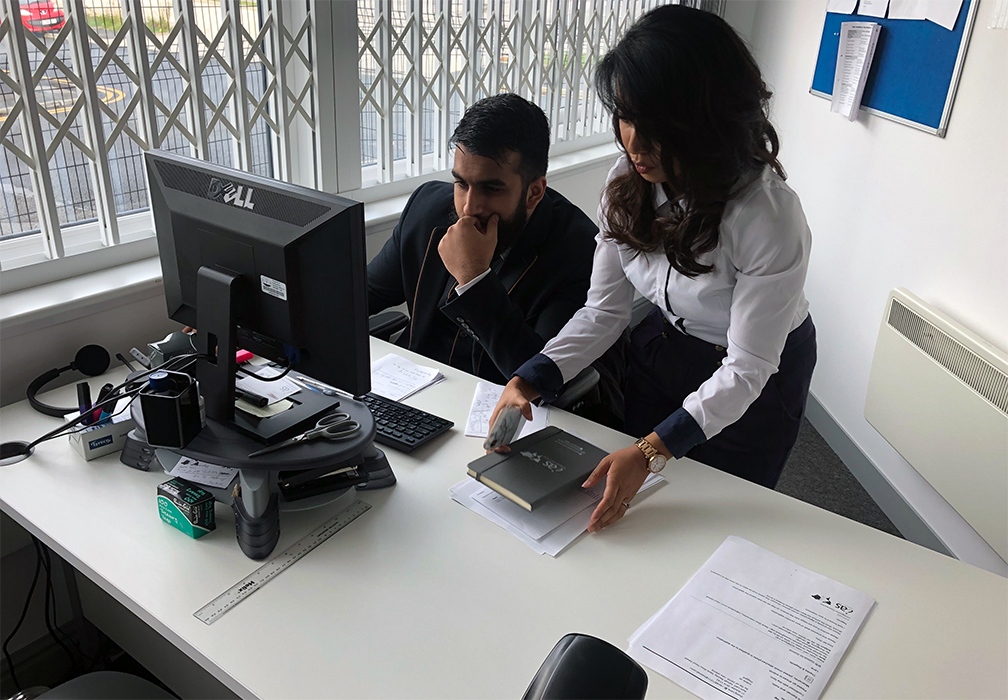
The Fast Track Package
Our Fast-Track Application Package gives your case priority with our immigration lawyers, helping you get your application prepared, checked and submitted as quickly as possible.
Your case receives priority handling, including accelerated document reviews, application preparation, communication with your caseworker and submission support.

The Appeal Package
Our immigration lawyers will review the decision, explain why it was refused and advise on the strongest option available to you, including an appeal, review or fresh application where appropriate.
We will examine the reasons for refusal, identify weaknesses or errors, assess your available options and provide the legal support and representation your case requires.
Related pages for your continued reading.
Frequently Asked Questions
Not all Spanish visas will allow you to travel to other European countries, but if you are applying for a short-stay Schengen visa, you may select the multiple-entry option to travel to other member countries in the European Union.
When scheduling visa interviews the policy is to schedule a separate interview for each person. Applicants should also attend in person, but you should make sure that any underage children attend with their legal guardian.

Clear, professional guidance.
Get clear, professional guidance for your immigration case.
Call Now Call To Discuss