
Portuguese Citizenship: Guide for UK Nationals
UK citizens who have lived in Portugal for a specified timeframe or have Portuguese ancestry can obtain Portuguese citizenship.
Our Portugal immigration lawyers can help you streamline your Portuguese citizenship application, irrespective of your chosen citizenship pathway. Contact us today at +44 (0) 333 305 9375 or via our website to speak with one of our Portugal immigration experts.
Applying for Citizenship in Portugal
UK nationals are increasingly seeking Portuguese citizenship due to the country’s welcoming environment, great climate, affordable cost of living, and the opportunity it provides to gain EU citizenship.
While some UK citizens may be able to claim Portuguese nationality automatically, most will have to fulfil some residency requirements, depending on the citizenship route.
If you’ve continuously lived in Portugal or held a resident permit for at least 5 years, you can apply for permanent residency or citizenship, provided you meet all other requirements. You must submit a naturalisation application to the Institute of Registries and Notaries in Portugal.
Portuguese citizenship grants you the freedom to travel, live, and work anywhere in the EU without requiring visas or permits. Portugal allows dual/multiple citizenships, so you can maintain your existing nationality when you obtain Portuguese citizenship.
Page Contents
- Applying for Citizenship in Portugal
- Options to Obtain Portuguese Citizenship
- Portuguese Citizenship by Birth
- Portuguese Citizenship by Descent
- Portuguese Citizenship through Marriage
- Portugal Citizenship by Investment
- Portugal Citizenship by Naturalisation/Residency
- Other Options to Get Citizenship in Portugal
- Requirements and Documentation for Portuguese Citizenship Application
- How to Apply for Portuguese Citizenship: Application Process
- Application Cost for Portuguese Citizenship
- How Long Does it Take to Get Portuguese Citizenship?
- Portuguese Language Test Requirements: What You Need to Know
- Obtaining a Portuguese Passport
- Benefits of Acquiring Citizenship in Portugal
- How Can Our Portugal Citizenship Lawyers Help
- Frequently Asked Questions
"I'm very happy with the standard of training received on the OISC Level 1 course, i passed my exam. Thank you!"
Liam Calvert
Posted 6 years ago
"My application was approved and a huge weight has been lifted from our shoulders this year "
Akeel Lakar
Posted 6 years ago
"We used this service for the spouse visa extension application to assure that all the information was valid and correct."
Nabil Anwar
Posted 6 years ago
Options to Obtain Portuguese Citizenship
British nationals have several options for obtaining Portuguese citizenship. The ideal pathway depends on individual circumstances, such as place of birth, ancestry, and financial situation.
There are 5 main pathways to acquiring Portuguese nationality. They are:
- Birth
- Descent
- Marriage
- Naturalisation
- Investment
Each pathway has its specific requirements, eligibility criteria, and timeline for acquiring citizenship. We’ll look at these in detail in the next sections.
Portuguese Citizenship by Birth
Children born to Portuguese nationals in Portugal automatically receive Portuguese citizenship. If you were born to at least one Portuguese parent abroad (including in the UK), you can still claim Portuguese citizenship, regardless of whether you received a different nationality at birth.
You can apply for a Portuguese passport at the Portuguese embassy or consulate in your country of residence. You’ll need to provide your birth certificate and that of your Portuguese parent as proof of your entitlement to Portuguese nationality.
If you were born in Portugal to non-Portuguese parents, you’ll automatically receive Portuguese citizenship if at least one of your parents has legally resided in Portugal for up to one year. However, the proposed changes to Portuguese nationality laws seek to increase the parental residency period to 5 years. The changes are currently being contested and haven’t been signed into law.
Once the new law is signed, children born to foreign nationals in Portugal will only automatically receive Portuguese citizenship if at least one of their parents has been residing in Portugal with a valid residency permit for 5 years.
Portuguese Citizenship by Descent
You can claim Portuguese citizenship if you were born abroad but have close Portuguese ancestry, i.e., one of your parents, grandparents, or great-grandparents is a Portuguese national. If you have a Portuguese parent, you may automatically acquire Portuguese citizenship upon registration of your birth at the Portuguese embassy or consulate.
If you’re claiming Portuguese citizenship by descent through a grandparent or great-grandparent, you’ll need to prove continuous lineage to your Portuguese ancestor and their nationality (their birth and marriage certificates). Your ancestors must have maintained an unbroken line of Portuguese nationality by registering births and marriages at the Portuguese embassy/consulate in their country of residence.
You must also have at least A2 proficiency in the Portuguese language and demonstrate strong cultural, economic, or social connections to Portugal.
Portuguese Citizenship through Marriage
You can apply for Portuguese citizenship if you’ve been married to or in a registered partnership or a de facto union with a Portuguese citizen for at least 3 years. You’ll have to provide evidence of your relationship with the Portuguese national and demonstrate strong social, cultural, or economic ties to Portugal (if you live abroad).
Proving a relationship is easier if you’re married or are in a civil partnership with a Portuguese national. You simply need to provide your government-issued marriage certificate or civil partnership registration document.
If you’re applying for citizenship as a de facto partner of a Portuguese national, you must provide proof that you live together and have been doing so for at least 3 years. Evidence can include rental agreements, utility payments, or bank statements showing that you both share the same address.
You can only apply for Portuguese citizenship by marriage while the relationship subsists. If you get divorced or break up your relationship, you cannot apply for citizenship even if your marriage/relationship lasted more than 3 years. However, if you get divorced/separated after you’ve submitted a citizenship application, your application will be processed normally regardless of your current relationship status.
Portugal Citizenship by Investment
Portugal’s residency by investment program, popularly called ‘the golden visa program,’ is one of the easiest pathways to obtaining Portuguese nationality. While it doesn’t automatically confer Portuguese citizenship, it allows you to apply for citizenship after 5 years with very minimal residency requirements.
The investment residency scheme grants Portuguese residency to foreign nationals in exchange for a substantial investment in the Portuguese economy. There are several investment options to choose from. You can make either of the following investments.
- €500,000 in an approved investment fund
- Donate €250,000 to a scientific research or cultural preservation project
- Invest €500,000 in a new Portuguese business that’ll create 5 permanent jobs or create 10 jobs.
You can include your immediate family members (spouse, dependent children under 26, and financially dependent parents) on your investment residency application. Once your application is approved, you and each family member included on your application will receive residence permits valid for 2 years, which can be renewed without any further investment.
Portugal golden visa holders are only required to stay in Portugal for 7 days per year, and after 5 years, they can apply for Portuguese citizenship. Your Portuguese residency starts counting from the date you submit your residence permit application.
However, this will change with the new amendment to the Portuguese Nationality Law. Once the law is signed and published, residency for naturalisation applications will start counting from the date of issuance of your first residence permit. The residency requirement will also increase from 5 years to 10 years for UK nationals.
Portugal Citizenship by Naturalisation/Residency
Citizenship by naturalisation is the most common route for foreign nationals to acquire Portuguese citizenship.
UK nationals who have lived in Portugal for at least 5 years under valid residence permits can apply for naturalisation as Portuguese citizens. You must not have stayed outside Portugal for 6 consecutive months during the 5 years. This pathway ensures foreign nationals fully integrate into Portuguese society and build strong ties before granting them citizenship.
In addition to being resident in Portugal for at least 5 years, you must also demonstrate proficiency in the Portuguese language to at least the A2 level to qualify for citizenship by naturalisation. You may also be required to pass a test of Portuguese culture. You must also have a clean criminal background record throughout your stay in Portugal.
Approved changes to the Portuguese citizenship law recommend an increase in the residency requirement for naturalisation. If the approved changes are passed into law, the residency requirement will increase from 5 years to 7 years for CLCP and UK nationals and 10 years for other foreign nationals, including UK citizens. The residency period will also start counting from the date of issuance of the initial residence permit.
Other Options to Get Citizenship in Portugal
Aside from the 5 main pathways for acquiring Portuguese citizenship, other options exist that allow special groups of foreign nationals to obtain Portuguese citizenship.
Citizenship by Sephardic Jewish Ancestry
Descendants of Sephardic Jews expelled from Portugal in the 15th century can claim Portuguese citizenship provided that they can prove their ancestry. Applying for citizenship through this pathway requires extensive documentation to prove Sephardic Jewish ancestry.
You will also need to prove that:
- You have maintained a connection with the Jewish community in Portugal
- You or your family members still use Sephardic last names
- You or your family members still speak the Ladino language
- You have social or economic ties to Portugal.
Before 2023, descendants of Sephardic Jews were automatically granted Portuguese citizenship upon proving their Sephardic origins. Starting in 2023, they are required to have at least 3 years of residency in Portugal and A2-level proficiency in the Portuguese language.
However, the 2025 Portuguese citizenship law reforms will close the Sephardic Jewish ancestry route. Once the changes are signed into law, citizenship by Sephardic Jewish ancestry will be formally closed to new applications.
Citizenship by Adoption
Foreign children under age 18 who are legally adopted by Portuguese nationals can apply for Portuguese citizenship immediately after the adoption is finalised. However, they must show some connection to Portugal. This could be through enrollment in a school in Portugal or proficiency in the Portuguese language.
The citizenship application must be submitted along with legal proof of the adoption and connection to Portugal. Application for adopted children of Portuguese parents is completely free for those adopted after 1981. Those adopted before 1981 must pay an application fee of €250.
Citizenship by Special Services
You can be granted citizenship in Portugal if you have provided special services to the Portuguese state or community, such as military service. You can apply for Portuguese citizenship if you have sufficient documentary evidence to prove that you have provided these services. You must also have a clean criminal record.
Citizenship for Those Who Lost Portuguese Nationality
Portuguese nationals who lost their citizenship may be able to reclaim Portuguese citizenship, depending on the circumstances under which it was lost. You can apply to reclaim lost Portuguese citizenship if:
- You lost your citizenship through the action of a parent or legal guardian when you were a child or had a disability.
- You lost your Portuguese citizenship but never acquired citizenship of another country.
- You lost your citizenship because you married a foreigner before 1981. Before the Portuguese Nationality Act of 1981, Portugal forbade dual citizenship, and women who married foreigners and got their husband’s citizenship automatically lost their Portuguese nationality.
- You lost your citizenship because you acquired another country’s citizenship before 1981, and want to retake Portuguese nationality.
Requirements and Documentation for Portuguese Citizenship Application
Overview
You must meet several requirements to qualify for naturalisation in Portugal. You must also provide sufficient supporting documents to prove your claim/right to Portuguese citizenship. The requirements for filing a Portuguese citizenship application include:
- You must have continuously resided in Portugal for at least 5 years (citizenship by naturalisation) or 3 years if applying as a descendant of Sephardic Jews.
- You must have a clean criminal record
- If applying for citizenship based on marriage, you must have been married to or in a de facto union with a Portuguese citizen for at least 3 years.
- If claiming citizenship through descent, you must be directly descended from at least one parent, grandparent, or great-grandparent who is a Portuguese national.
- You must demonstrate strong economic, cultural, or social ties to Portugal. This could be through frequent visits, residency, or owning a property in Portugal.
- You must be proficient in the Portuguese language to at least the A2 level of the Certificate of Portuguese as a Foreign Language (CIPLE).
Documents Required for Portuguese Citizenship Application
You’ll need to provide some or all of the following documents when applying for Portuguese citizenship. The documents you’ll be required to provide depend on your immigration situation and your naturalisation route.
The required documents for a Portuguese citizenship application include:
- Completed and duly signed citizenship application form.
- Valid Passport or other identity document
- Birth certificate
- If you’re applying through naturalisation, proof of legal residence in Portugal for the required residency period. This includes your resident permits and rental or property ownership documents.
- If applying through marriage, a marriage certificate or civil partnership registration is required as proof of relationship with your Portuguese spouse/partner.
- Proof of Portuguese ancestry if you’re applying for citizenship through descent. This could include birth, marriage, and death certificates proving continuous lineage and unbroken ties to Portugal.
- Criminal record certificates from every country you’ve lived in in the last 3 years.
- Proof of strong ties to Portugal, such as enrolment in a Portuguese school, ties to a Portuguese community, and property ownership.
- Proof of current residence address.
- CIPLE certificate or other certifications proving your proficiency in the Portuguese language
- A health certificate showing that you’re in good health and have no communicable disease.
- A letter of request for Portuguese citizenship addressed to the Minister of Justice.
- Certified and apostilled Portuguese translations of all documents in other languages.
Once the approved changes to the nationality act are signed into law, you’ll also need to demonstrate that you have sufficient financial means to support yourself in Portugal.
How to Apply for Portuguese Citizenship: Application Process
You can apply for Portuguese citizenship online, at the Civil Registry, or at the Portuguese Consulate nearest to you (if applying from abroad). If you’re applying online, you’ll need a Portuguese lawyer or solicitor to help you complete the online application.
If you’re applying from inside Portugal, you can submit your application in any of the following places.
- Institute of Registries and Notaries (IRN)
- National Support Centre for the Integration of Migrants (CNAIM) in Lisbon or Porto
- Central Registry Office in Lisbon.
- Nationality Desks at Citizen Shops
The process for obtaining Portuguese citizenship is quite straightforward, although collecting the required supporting documents can be taxing. The Portuguese application process is as follows.
- Complete and sign the citizenship application form. You can find this form on the Portuguese government’s website (gov.pt). Download the form and fill in all required sections accurately.
- Gather supporting documents required to prove your eligibility for Portuguese citizenship. Ideally, you should gather all these documents before starting your citizenship application to avoid last-minute scrambling and refusal.
- Pay the required fee and submit the completed application form along with the required supporting documentation.
The Civil Registry Office will evaluate your citizenship application to determine whether you meet all the requirements for citizenship. If your application is approved, you will receive an official letter confirming your new status as a Portuguese citizen.
If your application is refused, the Registry Office will send you a letter notifying you of the outcome of your application and explaining the reasons for the refusal.
Application Cost for Portuguese Citizenship
Applying for Portuguese citizenship comes with some financial costs. Here’s the breakdown of the application cost for Portuguese citizenship.
- Standard application fee – €250
- Children (under 18) and disabled – €175
- For citizenship by descent for under 18s (for children of Portuguese citizens) – €175
- For citizenship by descent for under 18s (if parents are not Portuguese citizens/weren’t born in Portugal) – €225
- Citizenship through investment can cost anywhere from €250,000 to over €500,000, including costs of investment, visa application, residence permit applications, and legal fees.
Besides the application fee for the Portuguese citizenship application, you can expect to incur additional expenses on
- Document translations and legalisations
- Obtaining required documents like bank statements, criminal record certificates, and health certificates
- CIPLE language test – €85
- Legal fees if you hired a lawyer or immigration consultant to assist with your application.
How Long Does it Take to Get Portuguese Citizenship?
Processing times for Portuguese citizenship applications vary depending on various factors such as your citizenship route, the volume of applications, the consulate you applied at, and whether there is a need for further documentation.
Portuguese citizenship applications typically take 6 months to over 24 months. Anecdotal evidence shows that citizenship by descent applications enjoy faster processing, with applicants receiving citizenship within 6 to 18 months. For other citizenship pathways, the average processing time is 24 months. You may be able to get expedited processing in exceptional circumstances.
The above-stated timeline does not include the residency period required for a citizenship application. Including the required residency period, the average timeline for obtaining Portuguese citizenship for most foreign nationals is 7 to 8 years. The timeline will increase to 9 to 12 years once the approved changes to Portuguese nationality law are signed.
Getting legal assistance for document gathering and application submission can speed up the application process; however, processing delays are common. The processing delays are largely due to the high volume of applications and paperwork issues. There may be further delays if there’s a need for additional supporting documents or an error in your application.
Portuguese Language Test Requirements: What You Need to Know
Portugal does not have an actual citizenship test. However, Portuguese nationality applicants must pass a Portuguese language test to prove they can understand, read, and write the Portuguese language. Applicants born in Portuguese-speaking countries who have nationality there are exempted from this requirement.
There are several providers of Portuguese language tests. However, the most popular test among British expats in Portugal is the CIPLE (Certificado Inicial de Português Língua Estrangeira). The test for this certificate lasts about 2 hours and comprises oral comprehension, oral expression, reading, and writing.
To pass the test, you must score at least 55% (A2 level), which corresponds to the A2 level of the Common European Framework of Reference for Languages (CEFR). The CIPLE test costs €85.
Obtaining a Portuguese Passport
Once your citizenship application is approved and you receive a letter confirming your Portuguese nationality, you will receive a Citizen’s Card, which makes you eligible to apply for a Portuguese passport. Portugal’s immigration laws require that Portuguese nationals leave and enter Portugal on Portuguese passports.
You can book an appointment to apply for a passport at a local registry office, a citizen’s shop, or at the nearest Portuguese consulate if you’re abroad. The appointment is usually booked online.
You’ll need to attend your appointment with a valid ID/proof of Portuguese nationality (your Citizen’s Card) and 2 recent passport-sized colour photographs. Your biometric data (photo and fingerprints) will be captured during the appointment. You’ll also pay an application fee.
The fees for Portugal passports are:
- €65 for standard passports
- €75 for e-passports
- €100 for applications at Portuguese consulates abroad
Benefits of Acquiring Citizenship in Portugal
Acquiring Portuguese citizenship comes with lots of benefits for UK nationals. Portugal offers similar standards of living as the UK at more affordable costs and a higher quality of life. Some of the benefits of acquiring Portuguese citizenship include:
- EU Citizenship and Mobility: Obtaining Portuguese citizenship automatically grants you EU citizenship. And as an EU national, you have the right to travel to, live, study, work, or retire in any EU/EEA member country without needing additional visas or permits. It increases your global mobility and grants access to many stable economies for work and business opportunities.
- High Quality of Life: Portuguese citizenship enables you to enjoy a European quality of life, a pleasant climate, rich cuisine, cultural heritage, and a stunning environment at affordable costs. The cost of living in Portugal is more affordable than in most Central and Western EU countries.
- Access to Quality Healthcare and Education: Portuguese citizens enjoy free quality education and mostly free access to the high-quality public healthcare system.
- Dual Citizenship: Portugal allows dual nationality, allowing you to hold Portuguese citizenship without losing your UK nationality, allowing you to enjoy the benefits of both countries.
Transfer of Citizenship to Your Descendants: You can pass down your Portuguese citizenship to your children and future descendants. Depending on your path to citizenship, your spouse/partner and children may receive Portuguese citizenship at the same time as you, which your grandchildren will inherit.
How Can Our Portugal Citizenship Lawyers Help
Portugal offers several paths for UK nationals to obtain Portuguese citizenship. And while the application process is quite straightforward, gathering the extensive documentation to prove eligibility for citizenship can be overwhelming and time-consuming without expert assistance.
Getting assistance from Portuguese immigration consultants like Total Law will relieve you of the stress and help streamline your citizenship application process. Our Portugal immigration lawyers will assist you in gathering the required supporting documents and preparing your citizenship application to the best standard to eliminate chances of rejection.
We are well-versed in the nuances of Portugal’s nationality laws and have several years of experience assisting our clients in acquiring Portuguese citizenship. We can guide you through the process in person, over the phone, or via video conferencing.
If you need help with your Portuguese citizenship application, a national visa or residence permit application, contact us today at +44 (0) 333 305 9375 or via our website for immediate assistance.

Advice Package
Get clear, expert advice on your visa options, eligibility and application before you commit to applying.

Application Package
Let our immigration lawyers prepare, check and manage your application so you can apply with confidence.

Fast Track Package
Need to apply quickly? Get priority handling by our immigration lawyers from preparation to submission.

Appeal Package
Been refused or received an unfavourable decision? Get expert legal help to challenge it or determine your next step.

The Advice Package
During this Advice Session, an immigration lawyer will assess your circumstances, explain your options and tell you what you need to do to make a strong application.
We review your circumstances, explain the relevant requirements, identify potential problems or refusal risks, and advise you on the evidence and next steps.

The Application Package
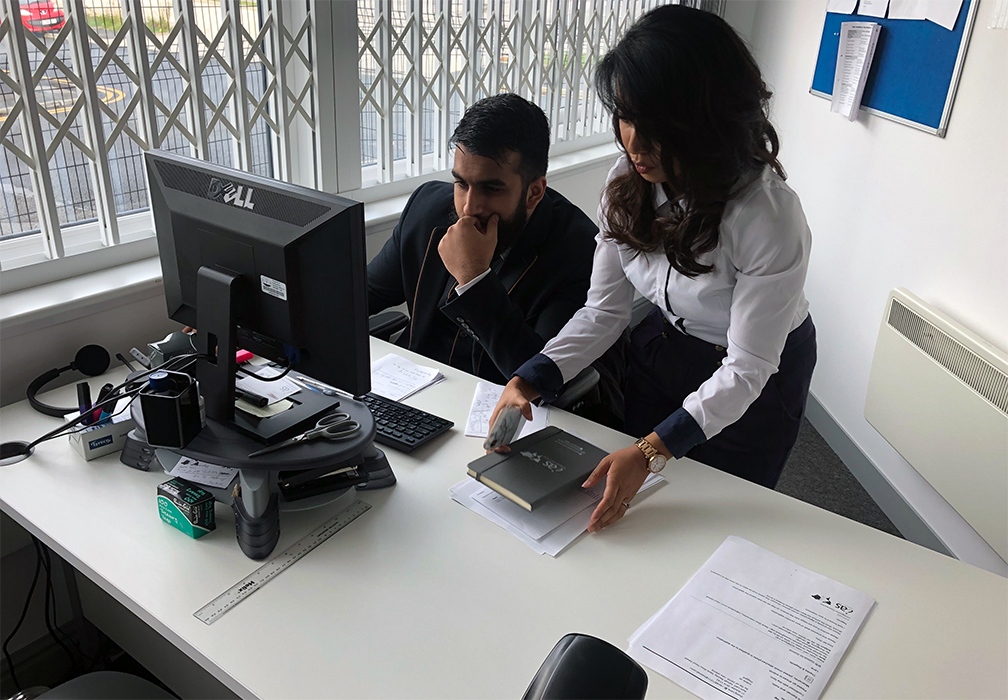
With our Application Package, your dedicated immigration lawyer will assess your case, prepare your application, check your supporting documents and submit your forms on your behalf.
We check your application for missing information, inconsistencies and potential issues before submission, helping you avoid common mistakes that could affect your case.
The Fast Track Package
Our Fast-Track Application Package gives your case priority with our immigration lawyers, helping you get your application prepared, checked and submitted as quickly as possible.
Your case receives priority handling, including accelerated document reviews, application preparation, communication with your caseworker and submission support.

The Appeal Package
Our immigration lawyers will review the decision, explain why it was refused and advise on the strongest option available to you, including an appeal, review or fresh application where appropriate.
We will examine the reasons for refusal, identify weaknesses or errors, assess your available options and provide the legal support and representation your case requires.
Related pages for your continued reading.
Frequently Asked Questions
To acquire Portuguese citizenship through marriage, you must have been married to or in a civil union with a Portuguese national for at least 3 years. Your citizenship application will take another 1 to 2 years to process. Therefore, the timeline for acquiring Portuguese citizenship through marriage is 4 to 5 years.
Yes, you can hold dual nationality in Portugal, as per the 1981 Portuguese Nationality Act. Before 1981, you automatically lost your Portuguese nationality once you became a citizen of another country.
The Portugal golden visa program reduces the physical residence requirement for citizenship. Instead of the 180-day physical presence requirement for Portuguese citizenship by naturalisation, you only have to be physically present in Portugal for 7 days per year with the golden visa. It streamlines the citizenship process for busy professionals and entrepreneurs who can afford to spend extended time in Portugal.
Although rare, your Portuguese citizenship can be revoked if you’re found guilty of a serious crime or terrorism. You can voluntarily renounce your Portuguese nationality to take on the citizenship of another country that does not permit dual citizenship. To do so, you can contact IRN in Portugal or the nearest Portuguese consulate. However, it may be difficult to reclaim Portuguese citizenship after voluntarily renouncing it.

Clear, professional guidance.
Get clear, professional guidance for your immigration case.
Call Now Call To Discuss