
Spouse Visa Spain: Expert Help for Requirements & Application
Spain permits non-EU citizens legally residing in the country to bring their spouses, civil partners, or unmarried partners to join them in Spain.
For more information about the Spain spouse visa and help with the application process, speak to one of our Spain immigration solicitors at Total Law. Contact us at +34 919015010 or online for immediate assistance.
Overview of Spouse Visa in Spain
Spouses and partners of Spanish citizens and residents can join their EU or non-EU partner in Spain through the family reunification route, specifically the Spain Spouse Visa. Whether you’ll need a visa to join your spouse or partner in Spain depends on the legal status of your Spanish-resident partner.
If your spouse is a Spanish citizen or an EU citizen resident in Spain, you will not need a Spouse visa to join them in Spain. However, if your Spanish-resident spouse or partner is a non-EU citizen, you must obtain a Spouse visa to join them in Spain.
Page Contents
- Overview of Spouse Visa in Spain
- EU Spouse Visa
- Non-EU Spouse Visa
- Non-EU Spouse Visa Application Procedure
- Documents Required For a Non-EU Spouse Visa Application
- Non-EU Spouse Visa Application Fees
- How Long Does the Non-EU Spouse Visa Process Take?
- After Submitting the Non-EU Spouse Visa Application, What Next?
- How Can Total Law Help?
- Frequently Asked Questions
"I'm very happy with the standard of training received on the OISC Level 1 course, i passed my exam. Thank you!"
Liam Calvert
Posted 6 years ago
"My application was approved and a huge weight has been lifted from our shoulders this year "
Akeel Lakar
Posted 6 years ago
"We used this service for the spouse visa extension application to assure that all the information was valid and correct."
Nabil Anwar
Posted 6 years ago
EU Spouse Visa for Spian
Non-EU spouses/partners of Spanish citizens or other European Union nationals resident in Spain do not require a Spouse visa to join their partners in Spain. However, they may need an entry visa to travel to Spain, depending on the nationality of the non-EU spouse.
Non-EU family members of EU nationals in Spain from visa-exempt countries can travel to Spain without a visa. Upon arrival in Spain, you must apply for an EU/EEA family member resident permit at the foreigner’s office in Spain.
You’ll be issued a residence card valid for five years. The residence card authorises you to live, work, and study in Spain. You become eligible for permanent residency upon renewal of the residence card.
If you’re a national of a country that requires a visa to visit Spain, you must first obtain a Schengen tourist visa to enter Spain. You’ll then apply for an EU family member residence card at the foreign nationals’ office.
Spouse Visa — Key Facts
| Item | Summary |
|---|---|
| Visa name (English) | Spain — Family Reunification (Spouse/Partner) Visa |
| Who it’s for | Non-EU family members (spouse, civil partner, registered partner, de facto partner) of non-EU nationals resident in Spain; note: separate rules for EU/EEA family members. |
| Validity on entry | Usually issued for 1 year (initial), with residence card/TIE to be obtained after arrival. |
| Rights granted | Live, work and study in Spain once authorised (residence card). |
| Where to apply | If reuniting with a non-EU resident: application normally starts in Spain by the resident (reagrupante) at the Oficina de Extranjería; the family member then applies for the national visa at the Spanish Consulate in their country. If joining an EU national, rules differ (apply for EU family member residence card in Spain). |
| Key timeframes | Decision on the initial reagrupación request usually within statutory period (often 2 months for initial decision at the Oficina de Extranjería) — consulate appointment and visa issue times vary by mission. |
| Fees | See consulate / Total.Law (varies by country and consulate). (You asked for “no fees” in the overview table — fees are not listed in this table.) |
Non-EU Spouse Visa for Spain
The non-EU spouse visa allows partners of non-EU nationals living in Spain to reunite with them. This visa is required to join a non-EU partner in Spain and its overseas territories.
It is issued for one year and is subject to subsequent renewals. The Spouse visa allows its holder to reside, work, and study in Spain.
Who Qualifies For a Non-EU Spouse Visa?
The Spouse visa is available to family members of non-EU/EEA nationals in Spain. It is available to a:
- Spouse: You qualify as a spouse if you’re legally married and your marriage is still valid. That is, you are not divorced or legally separated from your spouse.
- Civil Partner: You qualify as a civil partner if you’re not married but have legalised your relationship in your home country. You must ensure your partnership documentation is accurate, clear, and valid for immigration purposes.
- Common Law Partner: You qualify as a common law partner if your relationship is not formalised, but you have evidence that you have been co-habiting with your partner before they moved to Spain
To be eligible for this visa, your non-EU spouse must be a legal resident in Spain and have held a residency card for at least one year. You must also be able to provide sufficient proof that you have an ongoing intimate relationship with your partner and that the marriage or relationship is not one of convenience.
Supporting evidence can include joint bank accounts, census records, utility bills, or shared rental agreements. If you’re a common-law partner, you must provide proof that you were cohabiting with your partner for at least 12 months before they relocated to Spain.
Eligibility — EU Family Member vs Non-EU Spouse (comparison)
| Element | EU/EEA spouse (of EU citizen resident in Spain) | Non-EU spouse (of non-EU resident in Spain) |
|---|---|---|
| Need a spouse visa to enter? | Usually no if visa-exempt; may need short-stay (Schengen) visa depending on nationality | Yes — Family Reunification/Spouse visa required if joining a non-EU national resident in Spain |
| Where to apply for residency card | Apply in Spain for EU family member residence card on arrival | Reagrupante (resident in Spain) applies at Oficina de Extranjería; beneficiary applies for visa at Spanish consulate abroad |
| Residency card validity | Card typically valid 5 years for EU family members | Initial visa valid ~1 year; subsequent renewal(s) convert to multi-year residence card (check current rules) |
| Work rights | Yes (immediate) | Yes (once visa/residence authorised) |
| Proof of relationship | Marriage/civil registration or proof of durable relationship | Marriage/civil registration; for de facto partners: evidence of cohabitation (often 12 months before move) |
| Documents & legalisation | Standard civil documents may need legalisation/apostille + Spanish translations | Same — apostille/legalisation + certified translation required |
Spain Spouse Visa Application Process
The non-EU Spouse visa requires extensive documentation to prove your relationship. It also requires the involvement of you and your partner. Your partner will present the necessary evidence to immigration authorities in Spain while you do the same at the Spanish embassy or consulate abroad.
Obtaining an Initial Family Reunification Permit
This is the first step in the Spouse visa application process. Your family member in Spain has to apply for an initial family reunification permit at the local foreigner’s office in Spain.
To obtain this permit, they must prove to Spanish authorities that you’re in a valid relationship with them and are eligible for a Spouse visa. They must also show that they can financially support you in Spain.
Your partner must submit the following documents to prove your eligibility for the Spouse visa.
- Their passport
- Proof of relationship with you
- Proof of adequate accommodations
- An employment contract or bank statement proving financial stability
- Proof that they have not entered a relationship with someone else in Spain
- A clean criminal record check
- Proof of health insurance
After submitting the application and relevant supporting documents, your partner will typically receive a decision from the immigration office within two months. The immigration office may request additional documents if necessary, and this can increase waiting times.
Therefore, it’s essential to start the process early enough to accommodate any delays. We recommend starting within six months of your planned travel date.
Applying For the Non-EU Spouse Visa
You can start your visa application once your partner obtains the initial family reunification permit. You have two months from receipt of the permit to file your visa application. If you do not submit your application within two months, your partner will have to start the process all over.
You must make an appointment to submit your application in person at the Spanish consulate or visa application centre in your home country. You may be required to attend an interview where a consular officer will ask specific questions and take your biometric data.
Application Process — Step by step (Non-EU spouse)
| Step | Action | Typical timeframe & notes |
|---|---|---|
| 1 | Sponsor (resident in Spain) submits initial family-reunification application to Oficina de Extranjería / Delegación del Gobierno | Decision goal: often 2 months (varies). If denied, reasons must be expressed. |
| 2 | If authorised, Oficina issues initial reagrupación authorisation | Sponsor obtains original authorisation to give to family member |
| 3 | Beneficiary applies for national (long-stay) visa at Spanish Consulate with the authorisation and supporting docs | Consulate appointment wait times vary by country; visa issued if consular checks pass |
| 4 | Visa holder travels to Spain (often must enter within 3 months) | On arrival: apply for residence card/TIE at the foreigner’s office within 1 month (or as instructed) |
| 5 | Residence card issued — rights to work/study apply | Initial cards often 1 year, then renewal procedures; check renewal timing |
Documents Required For a Spain Spouse Visa Application
You must provide the following documents when applying for a non-EU spouse visa.
- A National Visa Application Form: You must complete and sign a Spanish national visa application form. You can download the form from the consulate website. Ensure you fill out all required sections and provide correct information. You can fill out the application in English or Spanish.
- A Valid Passport: You must submit your original passport and copies of the biometric pages. Your passport must have a minimum validity of four months from the application submission date and at least two blank pages.
- Photographs: Clear passport-sized photos taken on a white background no more than three months before the application date. Your face should be visible; no hairs, garments, or glasses should cover the oval of your face.
- Residence Card (NIE/TIE): A certified photocopy of your partner’s residency card.
- Initial Family Reunification Permit: the family reunification permit your partner obtained from Spanish immigration authorities.
- Documents Proving Family Relationship with the Spanish Resident: A marriage certificate, civil partnership certificate, or documents proving cohabitation for at least one year. If you or your partner were previously married, you must provide proof of divorce or separation from the previous partner.
- Medical Certificate: Original and a copy of a medical certificate proving that you do not have any illness that may be detrimental to public health.
- Criminal Record Check Certificate: A criminal background check certificate covering the last five years. The certificate must be issued at most six months before your application. If you’ve lived in more than one country in the last five years, you must provide criminal record certificates from each country.
- Proof of Residence: A valid ID card proving your residence in the consular district you’re applying from.
- Proof of private medical insurance
All documents must be legalised and stamped with the Apostille of Hague. You may also be required to provide Spanish translations of your documents.
Documents checklist
| Document | Who provides | Notes (legalisation / translation) |
|---|---|---|
| Visa application form + 1 photo | Applicant | Completed and signed; passport-style photo attached |
| Valid passport | Applicant | Passport validity typically ≥ 1 year; photocopy of biometric pages |
| Initial reagrupación authorisation | Sponsor (resident in Spain) | Issued by Oficina de Extranjería — original + copy |
| Sponsor’s residence card (Tarjeta) | Sponsor | Copy + original for verification |
| Marriage/civil partnership certificate or cohabitation evidence | Applicant & Sponsor | Foreign documents must be legalised/apostilled and translated into Spanish |
| Proof of adequate housing | Sponsor | Lease, title deed, or certificate from local authority |
| Proof of sufficient means | Sponsor | Employment contract, last 3–6 payslips, bank statements |
| Criminal record certificate | Applicant (and sometimes sponsor) | Legalised/apostilled + translated where required |
| Medical insurance / healthcare evidence | As required | Check consulate guidance |
| Any prior divorce/death certificates (if applicable) | Applicant | To prove current marital status |
Spain Spouse Visa Processing Time
The application process for a non-EU spouse visa can take some time due to the need for extensive documentation. Depending on your unique circumstances, additional interviews may be needed.
Therefore, it’s essential you start early to give yourself enough time to gather relevant supporting evidence.
How Long Does the Spouse Visa Process Take and What to Expect After Submission
| Stage | Responsible authority | Typical target / statutory time | After decision — next steps |
|---|---|---|---|
| Initial reagrupación application | Oficina de Extranjería / Delegación | Target decision ~2 months (subject to backlog) | If approved → consular visa application; if refused → appeal/administrative recourse |
| Consular visa processing | Spanish Consulate (applicant’s country) | Varies by post — weeks to months depending on demand | If visa granted → travel to Spain within time limit (often 3 months) |
| TIE / Residence card after arrival | Foreigner’s office (policía/Oficina) | Appointments vary; TIE issuance can take 1–3 months | Card allows work/study; then plan renewals as required |
Spain Spouse Visa Application Fees
The application fee for a Spouse visa differs for applicants of different nationalities. The visa fee is around €90.
Visa fees are revised quarterly and are subject to changes according to exchange rates.
To know the current visa application fee for your country, please contact us at Total Law.
After Submitting the Non-EU Spouse Visa Application, What Next?
After submitting your visa application, you’ll receive a receipt containing a code for tracking your application status online. Non-EU spouse visa applications are usually processed within two months but may take longer if there’s a need for further evidence.
You won’t be able to travel while your visa application is being processed because you’ll need to submit your passport along with the application. The consulate will notify you once a decision is made. They’ll either approve your application or reject it.
Your Visa Application Is Approved
Once your application is approved, you’ll be notified when you should collect your visa, passport, and other documents.
After receiving your visa, you must apply for a Foreigner’s Identification Card (NIE). You can apply for the residence visa at your local consular office or the foreigner’s office after arriving in Spain. The NIE is a temporary residence permit issued for an initial one year.
You can renew the residence permit every two years. After five years of continuous residence, you can apply for a permanent residence permit.
Your Visa Application Is Refused
You’ll be notified in writing if your non-EU spouse visa application is refused. The reasons for the refusal will be clearly stated. You can accept or appeal the decision if you believe you were wrongfully denied.
If you decide to appeal the decision, you must do so within one month of receiving the refusal notice. However, you should only appeal a decision if you have strong evidence to corroborate your claims of wrongful refusal. The judicial review process is often long and complex, and you’ll need an immigration lawyer to guide or represent you.
How Can Total Law Help?
Although a non-EU spouse visa is one of the easiest Spain visa routes, the process is lengthy and can be overwhelming. Gathering the required documents to prove eligibility and obtaining apostille stamps and translations can be time-consuming.
It is particularly tasking if your relationship situation is complex, as getting the correct supporting evidence may be challenging. This is why you need to consult an expert immigration lawyer early on in the process.
Our Spain immigration lawyers at Total Law are conversant with the nuances of family reunification visas. We will help determine the proper documentation to prove your eligibility and reduce any chances of refusal. We can also help with legal representation if you’ve received a visa refusal and are considering appealing the decision.
Contact us today for guidance and assistance with your no-EU spouse visa application. You can reach us anytime at +34 919015010 or via our website.

Advice Package
Get clear, expert advice on your visa options, eligibility and application before you commit to applying.

Application Package
Let our immigration lawyers prepare, check and manage your application so you can apply with confidence.

Fast Track Package
Need to apply quickly? Get priority handling by our immigration lawyers from preparation to submission.

Appeal Package
Been refused or received an unfavourable decision? Get expert legal help to challenge it or determine your next step.

The Advice Package
During this Advice Session, an immigration lawyer will assess your circumstances, explain your options and tell you what you need to do to make a strong application.
We review your circumstances, explain the relevant requirements, identify potential problems or refusal risks, and advise you on the evidence and next steps.

The Application Package
With our Application Package, your dedicated immigration lawyer will assess your case, prepare your application, check your supporting documents and submit your forms on your behalf.
We check your application for missing information, inconsistencies and potential issues before submission, helping you avoid common mistakes that could affect your case.
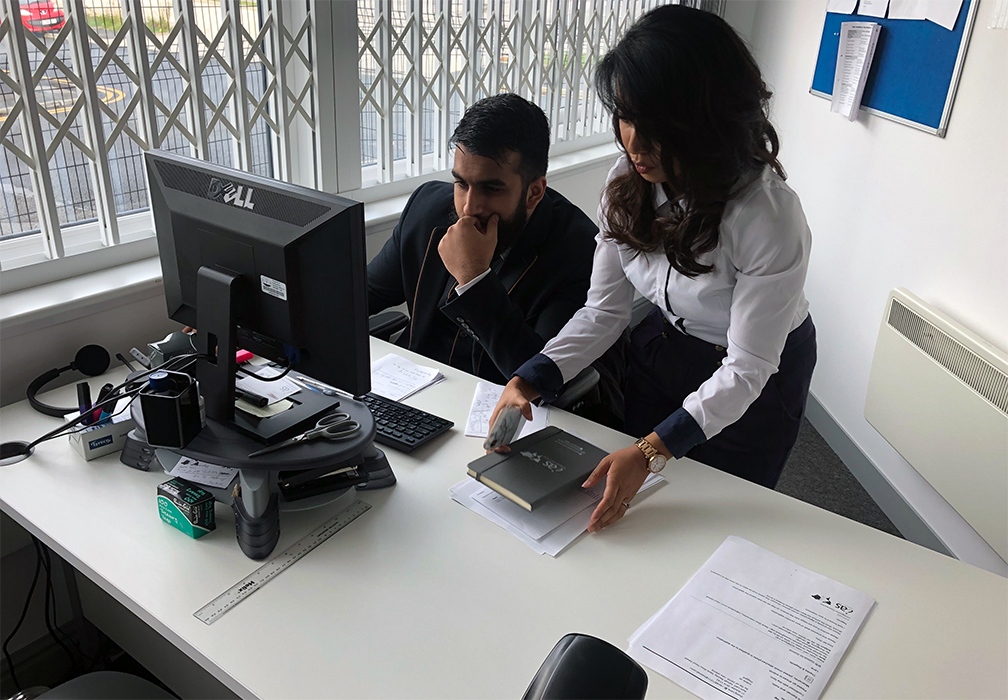
The Fast Track Package
Our Fast-Track Application Package gives your case priority with our immigration lawyers, helping you get your application prepared, checked and submitted as quickly as possible.
Your case receives priority handling, including accelerated document reviews, application preparation, communication with your caseworker and submission support.

The Appeal Package
Our immigration lawyers will review the decision, explain why it was refused and advise on the strongest option available to you, including an appeal, review or fresh application where appropriate.
We will examine the reasons for refusal, identify weaknesses or errors, assess your available options and provide the legal support and representation your case requires.
Related pages for your continued reading.
Frequently Asked Questions
It depends on the stage of the family reunion visa process. If you separate while processing your visa abroad, you’ll no longer be eligible for a spouse visa. However, if you’ve already lived with them for a year before the separation, you may be able to renew your residence permit.
Yes, the spouse visa allows you to work in Spain.
You can bring your unmarried partner to Spain, provided you can prove that you were cohabiting for up to a year before you relocated to Spain and have maintained the relationship.

Clear, professional guidance.
Get clear, professional guidance for your immigration case.
Call Now Call To Discuss