
Spain Residence Permit
Spain offers a selection of residential permits to individuals who wish to live in the country temporarily or permanently.
Depending on your circumstances and goals it can be difficult to understand what kind of permission you need and how to apply for it. Our team of immigration lawyers at Total Law have experience with all aspects of Spanish immigration and will be happy to assist you. You can call us today at +44 (0) 333 305 9375 to receive immediate help.
Page Contents
- Residency in Spain for UK Citizens
- How to Qualify for a Residential Permit in Spain?
- Types of Residential Permits in Spain
- What Are the New Rules for Residency in Spain?
- How to Get a Residency in Spain?
- Documents Required for Spanish Residence Permit
- Processing Times
- Alternative Residency Pathways
- Residence Certificate for EU Citizens
- Obtaining a Foreigner Identity Card and NIE Number in Spain
- Spanish Citizenship
- How Total Law Can Help
- FAQ
Residency in Spain for UK Citizens
UK citizens who wish to establish temporary or long-term residence in Spain will be required to apply for the appropriate residential permit.
While long-term or permanent stays will require a different permission, newcomers who plan to stay in the extended future will nevertheless need to apply for an initial temporary permission. This will be renewable and allows you to gain the required residential duration which will eventually enable you to apply for a more permanent residence permit, should you wish to stay longer.
"I'm very happy with the standard of training received on the OISC Level 1 course, i passed my exam. Thank you!"
Liam Calvert
Posted 6 years ago
"My application was approved and a huge weight has been lifted from our shoulders this year "
Akeel Lakar
Posted 6 years ago
"We used this service for the spouse visa extension application to assure that all the information was valid and correct."
Nabil Anwar
Posted 6 years ago
How to Qualify for a Residential Permit in Spain?
To qualify for a residential permission, you will need to have been granted an eligible residency visa to live in Spain. In general, these may be most of the traditional long-stay or national visas, including the various work visa pathways, the student visa, family members visa, or the non-lucrative visa.
To qualify for a long-term residential permit you will need to remain eligible under your chosen Spanish residence visa and fulfil the minimum residential requirement, which is usually five years of living in Spain.

Types of Residential Permits in Spain
Overview
Spain offers different residency categories that are usually distinguished by the amount of time someone must have spent in the country before becoming eligible. At a glance, this includes:
- Temporary residency
- Long-term or permanent residency
Temporary Residence Permit
The temporary residential permission is the general starting point for most individuals wishing to establish residence in the country. It will be suitable for temporary stays but offers a path towards qualifying for long-term residential permission, as time spent on a temporary-permit will count towards residential requirements.
Generally, temporary residence permits are issued for one year at a time but may be renewed for up to five years in total. After five years, you will need to apply for a long-term residential permit instead.
You may be eligible for a temporary residence permit if you meet any of the following criteria:
- You are a student with a qualifying Spanish educational institution and have been granted a national student visa
- You are an employee who has been hired by a qualifying Spanish employer or who was transferred to a Spanish branch of your company. You must have been granted one of the national employee visas
- You are an entrepreneur or self-employed individual who has been granted one of the appropriate national work visas
- You are the spouse or child of a Spanish citizen
- You are an investor who has qualified for the Spanish golden visa (note that this visa is being discontinued)
Long-Term Residence Permit
Spain’s long-term or permanent residential permission (also called the Tarjeta Comunitatia Permanente) will be available once you have obtained five years of legal residence in Spain. It will be available to anyone who has immigrated under one of the national long-stay visas, provided that they stayed eligible under the chosen visa’s conditions for the five-year period.
Permanent residence is the next step in your Spanish residential journey and after another five years (ten years in total) you may be eligible to apply for Spanish citizenship.

What Are the Rules for Residency in Spain?
Spain has began to implement a variety of changes to the pre-existing immigration rules and regulations. Depending on your circumstances and the visa you have or are planning to obtain, this might affect your eligibility for residence in the country.
While the changes aim to streamline applications and improve processing times, you should make sure that your immigration plans aren’t affected by changes such as differences in the visas that are available going forward. If you are unsure or if your circumstances were affected by some of the changes, you should seek legal advice to figure out the best next step. Our immigration lawyers will be happy to help you navigate any unprecedented adjustments that might be necessary. You can call Total Law today at +44 (0) 333 305 9375 and we will help you feel certain that you are on the right path.
How to Get a Residency in Spain?
To establish residence in Spain you will first need to make sure that you have been granted an appropriate visa that matches your circumstances and needs and also allows for extended residency.
Individuals who are already in Spain will need to make an appointment with the relevant Spanish authorities which may be done through your local immigration office (Oficina de Extranjería) or at a national police station (Comisería National de Policía).
If you are applying while not in the country, you must do so through your local embassy or consulate. This may be the Spanish embassy in London or Edinburgh or the Spanish consulate in Manchester.
Documents Required for Spanish Residence Permit
Overview
When applying for a Spanish residential permission you will need to provide documents that show your eligibility. While these may vary depending on your circumstances, you will usually need to show the following:
- Your valid passport and one copy(this must be valid for at least 4 more months)
- The appropriate application form
- Three recent photographs of you that meet passport requirements
- Proof of your address in Spain
- Financial details showing that you have the means to support yourself
- A criminal record certificate that covers the last five years
- A medical certificate showing that you do not have a significant health condition that may put public health at risk
- Proof of your health insurance policy (this must cover you for at least €30,000)
You will need to show that you have paid all the associated fees before you can be granted your residential permit.
Application Forms
You will need to make sure to fill out the appropriate application form. These change depending on the type of residential permission that you are applying for.
When applying for temporary residency, you will need to submit form EX-15 for your foreign identity number (NIE) and form EX-17 to request your foreign identity card (TIE).
When applying for permanent residency, you will need to submit form EX-11.
If you are a UK resident who holds status as an EU citizen, you will need to submit form EX-18 to obtain your EU Registry Certificate.
Application Fees
Depending on your circumstances, the exact costs you may incur can vary. However, you should expect to pay around €80 for your Spanish residence permit application.
Processing Times
The processing times can be vastly different depending on the permission type you are applying for and you should be prepared to wait for an extended period. For first-time applications, it will depend on your choice of visa so processing times may range from 15 days to half a year. Subsequent applications or extensions may be quicker but can still take up to two months on average.
It is important that you apply with plenty of time before you need your permission. If you are applying for a renewal of your residential permit you may do so up to 60 days before your current one expires.
Alternative Residency Pathways
While UK citizens will usually be required to apply for a long-stay visa and qualify for residency this way, you may be eligible for an alternative path to residency if you are a UK resident with a different nationality.
Generally, eligible individuals must be from the European Union or the European Economic Area, including Switzerland, if they wish to qualify for this alternative route. European Union Citizens or EEA nationals wishing to move from the UK to Spain, you will need to apply for an EU registry certificate instead.
Residence Certificate for EU Citizens
Overview
EU or EEA nationals may establish residence in Spain without first requiring a visa. Instead, you must apply for your official EU registry certificate if you are planning to settle in Spain under this route. You will need to apply within three months of your arrival in Spain.

Documents for the EU Registry Certificate
When applying for your registry certificate, you will usually need to provide the following documents:
- Application form EX-18
- Your valid passport
- Payment receipts for all associated fees
- Social Security documents
- Details of your health insurance policy
- Financial details that show you have the means to support yourself
- Any documents pertaining to your educational plans and enrollment if you are a student
- Any documents pertaining to your employment, including recruitment details and information about your employer, including your tax identification number (CIF)
- Evidence that you have obtained all necessary registrations for your business, where applicable
Obtaining a Foreigner Identity Card and NIE Number in Spain
Overview
When you are entering Spain with the intention of staying for more than 6 months, you will need to obtain a NIE number and Spanish Foreign Identity Card (TIE). Your NIE is unique to you and will appear on all the important documents that you may need to present throughout your time in Spain.
Applications for your Spanish Foreign Identity card and number can be done at any Spanish immigration office, as well as most police stations. Applications should be filed online, where you will also need to pay your application fee. Once this is done, you will need to arrange for an interview appointment.
You should do so within the first month of entering Spain. Keep in mind that while your actual card may not arrive for a while, you will be able to prove your legal residence with the application confirmation receipt that you will be given when you have applied.
Documents for Your Foreign Identity Card
When applying for your Foreign Identity Card and NIE, you will need to provide select documents to show your circumstances and eligibility. In general, you should expect to provide the following:
- Form EX-15
- Form EX-17
- A recent photograph that complies with visa requirements
- Your Social Security registration document
- Proof of payment for all associated fees
Spanish Citizenship
Overview
After ten years of permanent residence in Spain, you may be eligible to obtain citizenship and a permanent Spanish ID card. If you are applying through marriage, you will usually qualify sooner.
One of the main benefits of Spanish citizenship is that it grants you additional rights in the country such as the right to vote or to work for any kind of company in Spain without needing to think of visa requirements.
However, you should keep in mind that Spain doesn’t usually allow foreigners to obtain dual citizenship. Unless you are from a Spanish-American country like the Philippines, Portugal, Andorra or Equatorial Guinea, you will have to give up your citizenship in your home country.
Requirements for Spanish Citizenship
Beyond the minimum residential requirements of five years, you will need to show that you have not engaged in any criminal activities during your time in Spain. Additionally, you will need to pass two Spanish citizenship tests, the CCSE and the DELE A2.
Depending on your application route, you may need to prove that you have a right to apply through the path you have chosen. When applying through marriage you will need to show your marriage certificate to a Spanish citizen. Alternatively, if you are applying through descent you must show evidence that you have a qualifying Spanish relative.
You will apply online and pay your fees, before making an appointment with an immigration office to complete the process.
How Total Law Can Help
Whether you are only just starting your immigration journey to Spain or have lived there for a while, the residential permission application process can be confusing to navigate.
It is important that you fully understand what will be asked of you during the application and how to properly prepare for whichever permission you wish to apply for. Our team of immigration lawyers at Total Law specialises in the nuances of Spanish residential permissions and will be happy to advise you along the way. You can call us today at +44 (0) 333 305 9375 to receive immediate advice on your individual situation.

Advice Package
Get clear, expert advice on your visa options, eligibility and application before you commit to applying.

Application Package
Let our immigration lawyers prepare, check and manage your application so you can apply with confidence.

Fast Track Package
Need to apply quickly? Get priority handling by our immigration lawyers from preparation to submission.

Appeal Package
Been refused or received an unfavourable decision? Get expert legal help to challenge it or determine your next step.

The Advice Package
During this Advice Session, an immigration lawyer will assess your circumstances, explain your options and tell you what you need to do to make a strong application.
We review your circumstances, explain the relevant requirements, identify potential problems or refusal risks, and advise you on the evidence and next steps.

The Application Package
With our Application Package, your dedicated immigration lawyer will assess your case, prepare your application, check your supporting documents and submit your forms on your behalf.
We check your application for missing information, inconsistencies and potential issues before submission, helping you avoid common mistakes that could affect your case.
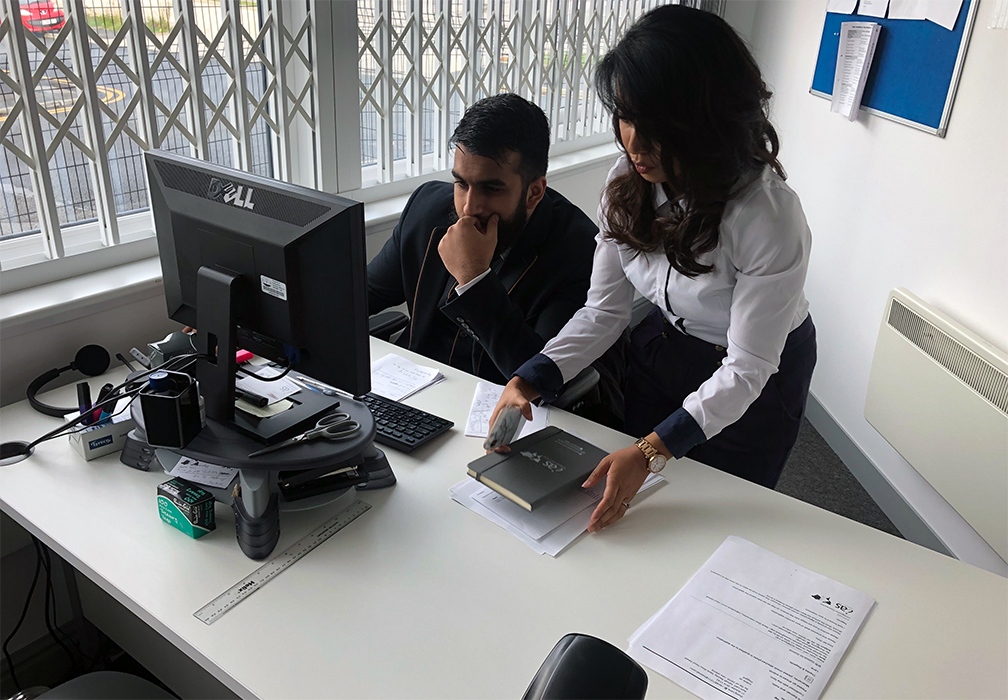
The Fast Track Package
Our Fast-Track Application Package gives your case priority with our immigration lawyers, helping you get your application prepared, checked and submitted as quickly as possible.
Your case receives priority handling, including accelerated document reviews, application preparation, communication with your caseworker and submission support.

The Appeal Package
Our immigration lawyers will review the decision, explain why it was refused and advise on the strongest option available to you, including an appeal, review or fresh application where appropriate.
We will examine the reasons for refusal, identify weaknesses or errors, assess your available options and provide the legal support and representation your case requires.
Related pages for your continued reading.
FAQ
When you have been granted a temporary residential permit, you will need to maintain continuous residence. This means that you may not leave the country for more than six consecutive months in a year. Once you have been granted permanent residential permission, you may leave Spain for up to 2 years. Keep in mind that to qualify for the minimum residential requirements, you have to actually be in the country.
While there are no strict language requirements for temporary and long-term Spanish residency, you may need to show that you speak the language as part of the visa that you have applied with. Additionally, you will need to show that you understand and Speak the Spanish language reasonably well if you wish to apply for Spanish citizenship.
