
German Citizenship
Canadians can apply for German citizenship, get a German passport and settle permanently in the country. However, they must meet the eligibility criteria.
The rules for citizenship and immigration in Germany are complex and will vary based on your circumstances. Enlist the help of our immigration advisors at Total Law to guide you through the complex application process. If you want to reach us, call +1 844 290 6312 or message us online.
Page Contents
- Establishing German Citizenship
- Eligibility Requirements for Obtaining German Citizenship
- German Citizenship by Naturalization
- German Citizenship by Descent
- German Citizenship by Birth
- German Citizenship by Marriage
- Naturalization of Victims of Nationalsocialist Regime’s Persecution and their Descendants
- Dual/Multiple Citizenship(s) Germany
- How to Get Citizenship in Germany
- Application Forms and Translation Aid
- How Long Does it Take to Get Citizenship in Germany?
- What is the Cost for German Citizenship?
- Are Spouses or Registered Partners of German Citizens Eligible for Early Naturalization?
- What is a Naturalization Test?
- How Can Total Law Help?
- Frequently Asked Questions
Establishing German Citizenship
The primary way to obtain German citizenship is by descent, that is, being born to a German parent. It is important to note that your parents must be German citizens at the time of birth for you to claim citizenship by descent.
If you were born in Canada to German parents born on or after January 1, 2000, outside Germany, you cannot claim citizenship by descent. The only exception to this rule is if your birth was registered with a German mission within a year of your birth.
You can receive German citizenship by birth if you were born after the year 2000 to Canadian parents living in Germany for a long time.
There are other ways to obtain German citizenship, and these include:
- Citizenship by naturalization.
- Citizenship by declaration.
- Restoration of citizenship.
- Citizenship by marriage.
One of the things you are entitled to as a German citizen is a German passport. So, before you can request a passport in Germany, you must verify if you are a German citizen.
If you live in Germany, you can confirm your status as a German citizen by contacting the Federal Office of Administration in Cologne. They are the German parastatal empowered to handle nationality matters.
If you are in Canada, you can use the online contact form to verify if you are a German citizen.
"I'm very happy with the standard of training received on the OISC Level 1 course, i passed my exam. Thank you!"
Liam Calvert
Posted 6 years ago
"My application was approved and a huge weight has been lifted from our shoulders this year "
Akeel Lakar
Posted 6 years ago
"We used this service for the spouse visa extension application to assure that all the information was valid and correct."
Nabil Anwar
Posted 6 years ago
Eligibility Requirements for Obtaining German Citizenship
Here are the conditions on which you can get German citizenship below:
- You were born to German parents.
- You were born to foreign nationals in Germany for a long time.
- You have held the EU Blue Card, been a permanent resident or held a German residence permit that is a route to citizenship.
- You wrote and passed the naturalization test.
- You have been married to or been a registered partner (in the case of same-sex relationships) of a German citizen for at least 3 years.
- You have lived in Germany lawfully for 6 to 8 years.
- You can take care of your family size in Germany without government support like social assistance and unemployment benefits.
- You have a sufficient knowledge of the German language.
- You have not been convicted of any criminal offense.
- You gave up or lost your previous nationality.
- You are committed to obeying the rules of the Republic of Germany.
- You were a descendant of victims of the Nazi persecution.
German Citizenship by Naturalization
Citizenship by naturalization in Germany is usually based on the length of time you have spent in Germany lawfully. To apply for citizenship via this route, you’ll have to show you have been living in Germany for at least 8 years on a residence permit that is a route to citizenship.
It is important to note that studying in Germany for up to 8 years cannot make you eligible for naturalization. Many Canadians who apply for German citizenship through this pathway usually do so through employment-based residence permits like the work visa or the EU Blue Card.
After completing an integration course, you can apply for German citizenship after 7 years.
To naturalize in Germany, you have to:
- Pledge loyalty and allegiance to the German constitution.
- Prove that you have adequate knowledge of the German language.
- Pass the naturalization test, which proves you’re familiar with the German government, law, system of living and society.
- Be able to support you and your family members (if any) without social assistance.
- Be free of any criminal convictions.
German Citizenship by Descent
You can acquire German nationality automatically if you were born to a German parent.
However, there are caveats.
If you were born to German parents born after December 31st 1999, and are a resident of Canada, you are not automatically a German citizen. You are automatically Canadian because you were born on Canadian soil per the Canadian nationality law. You can only become a German citizen if your parents registered your birth with the German missions in Canada before your first birthday.
If this is not done, you’ll have to apply for German citizenship through other means.

German Citizenship by Birth
You do not become a German citizen automatically because you were born in Germany. You are automatically a German citizen if you were born in Germany to German parents.
If you were born in Germany to Canadian parents, you can obtain citizenship if you can prove your parents have lived legally in Germany for at least 8 years and have permanent residency there.
You can acquire German nationality if you were adopted into a family with a German parent. However, your adoption must have been recognized by German law. This route is only possible if your adoption occurred in or after 1977.
If your mother was a Canadian and your father was German, and you were born out of wedlock, you can also apply for German citizenship. However, you must prove that your parents got married before July 1998.
German Citizenship by Marriage
Canadians married to or in relationships with German citizens can apply for citizenship. To be eligible for this route to citizenship, you must show that:
- You have been married to a German citizen for at least 3 years. Your marriage must have been held in or registered in Germany to be considered valid.
- You have lived in Germany for at least 3 consecutive years if you are married to a German citizen or 4 years if you are married to a naturalized citizen.
- You have an adequate understanding of the German language up to the B1 level. You are exempt from this if you are old or have a learning disability or illness. You are also exempt from writing this test if you completed primary school in Germany.
- You have not been convicted of any criminal offense or currently under investigation.
- You have adequate knowledge of German society, as evidenced by passing the naturalization test.
- You must pledge to abide by the laws of the Republic of Germany.
As of 2020, the constitution of Germany has made provision for people who were persecuted and stripped of their German nationality during the Nationalsocialist regime to re-acquire German citizenship. This applies not just to the victims but also to their descendants.

Dual/Multiple Citizenship(s) Germany
Germany does not permit dual or multiple citizenship. The law guiding German citizenship is structured to prevent dual citizenship. If you are a German citizen and willingly apply for another nationality, you automatically lose your Canadian citizenship.
To be exempt from this, you must have obtained your other nationality by law. If your parents are German and you were born in Canada, you do not have to lose your German nationality because Canadian nationality was conferred on you by law.
You are also exempt from losing your German nationality if you acquired the citizenship of an EU member state.
If you were born in Germany to Canadian parents who are permanent residents in Germany, you can have dual nationality. However, upon turning 21, you must choose between Germany or Canada. You are exempt from this if you grew up in Germany.
How to Get Citizenship in Germany
To apply for German citizenship, follow the steps below:
Step 1: Prepare Your Documents
The first thing to do during your German citizenship application is to gather your documents. The documents you will present depend on the route you are taking to apply for citizenship. You’ll find the application forms section below. Use it as a checklist for your application.
You can also get in touch with any of the following parastatals:
- The Youth Migration Services.
- The district or municipal administrative office is close to your place of residence in Germany.
- The Immigration authority is in charge of your municipality or town.
- The Migration Advice Service for Adult Immigrants.
Alternatively, you can reach us at Total Law to get started on how to get German citizenship.
Give us a call now at +1 844 290 6312 or send a message online. We can help you prepare your documents.
Step 2: Obtain the Application Form
After gathering your documents, you will visit any government offices listed above to obtain an application form. You are expected to fill the form with accurate information. The information on the form must tally with the one on your supporting documents.
Note that the form is written in German and must be completed in German. This is one way to prove that you have an adequate understanding of the German language.
Step 3: Take the Naturalization Test
You must show adequate knowledge of German society, laws and history by taking the naturalization test. The test is taken at the Federal Office for Migration and Refugees’ test centers. You have 1 hour to answer 33 questions.
You must get at least 17 of the questions correctly to pass. You can retake the exam if you score less than 17. The exam costs €25. You can visit the website of the Federal Office for Migration and Refugees to practice for the test.
Step 4: Take the German Language Proficiency Test
You’ll have to score at least a B1 to pass. The test must be taken at approved centers across the country.
Step 5: Pay the Application Fee
Ensure that you pay your application fee. The receipt of payment must accompany your documents.
Step 6: Submit Your Application
Go to the government office where you picked up the application form and submit your documents. Your fingerprints and passport photo will be taken.
Step 7: Get Your Citizenship Certificate
Upon issuance of a certificate of citizenship, you’ll pay an additional €25.
Application Forms and Translation Aid
Here are the application forms and other documents you need in your application:
- Form F, if you are at least 16.
- Form F_K is for applicants less than 16. Every adult responsible for the applicant must sign this form.
- Appendix V supplies information if you have German ancestry.
- Vollmacht, if you want to give someone else a power of attorney to apply on your behalf.
- Passport that proves your nationality.
- Birth certificate or certificate of adoption.
- Marriage certificate, if it applies.
- German resident permit.
- Proof of passing the naturalization test.
- Result of the German language test.
- Receipt of paying the application fee.
- Criminal history certificate.
Note that you must fill out the forms in German. A sworn translator must translate documents that are not in German.
Below are the recognized sworn translators:
- Public notaries.
- Registrars of civil registry.
- German authorities.
Public foreign documents carry a Hague apostille or be legalized.
You are expected to submit the certified copies of your document and not the original. You will be told if you need to submit original documents.

How Long Does it Take to Get Citizenship in Germany?
It could take up to 2 years for you to get a decision on your citizenship application. Processing time is affected by the workload of the Federal Office of Administration in Cologne.
To save time, you must ensure the information and documents you submitted are correct. The Federal Office of Administration in Cologne can contact you anytime to ask for more information regarding your application.
What is the Cost for German Citizenship?
- Applicants 16 years and above will pay €255.
- Applicants under 16 will pay €51 if they apply with their parents.
- Applicants under 16 will pay €255 if they apply alone.
You can pay a reduced fee if you earn a low salary or are applying with many children. You could also reach an agreement with the authorities to pay in installments.
Are Spouses or Registered Partners of German Citizens Eligible for Early Naturalization?
Spouses or registered partners of German citizens are eligible for early naturalization. Naturalization laws typically require the applicant to have spent 8 years on German soil with a valid residence permit.
However, if you are married to or a registered partner of a German citizen, you only need to have lived in Germany for 4 years (if your partner naturalized) and 3 years for a German citizen by birth.

What is a Naturalization Test?
The Federal Office for Migration and Refugees administers the naturalization test. It proves that you have an adequate knowledge of German law and society life. The exam consists of 33 questions picked from different subject matters.
The areas include:
- Living in a democracy.
- People and society.
- Federal land.
- History and responsibility.
To prepare for the naturalization test, visit the website of the Federal Office for Migration and Refugees. On the website, you can download the curriculum for the course and sample test questions that you can use for your practice.
The Federal Office for Migration and Refugees can also tell you the center closest to you where you can register and take the test. There is also a catalog that shows you all the test centers in Germany.
How Can Total Law Help?
The German citizenship process is complex because the different pathways have different requirements. It also requires one to gather many supporting documents. This complex application procedure often keeps many back from applying for German citizenship.
At Total Law, we have expert immigration advisors with years of experience in German citizenship applications.
Our services include assessing your eligibility for German citizenship, helping you prepare your documents and application package and making the application on your behalf as your legal representative.
You can also consult our lawyers for advice on German citizenship requirements and information about other German visas.
Do you want to know more about our services or speak with any of our immigration caseworkers? We are available to take your calls at +1 844 290 6312. You can also send us a chat if you prefer that medium.

Advice Package
Get clear, expert advice on your visa options, eligibility and application before you commit to applying.

Application Package
Let our immigration lawyers prepare, check and manage your application so you can apply with confidence.

Fast Track Package
Need to apply quickly? Get priority handling by our immigration lawyers from preparation to submission.

Appeal Package
Been refused or received an unfavourable decision? Get expert legal help to challenge it or determine your next step.

The Advice Package
During this Advice Session, an immigration lawyer will assess your circumstances, explain your options and tell you what you need to do to make a strong application.
We review your circumstances, explain the relevant requirements, identify potential problems or refusal risks, and advise you on the evidence and next steps.

The Application Package
With our Application Package, your dedicated immigration lawyer will assess your case, prepare your application, check your supporting documents and submit your forms on your behalf.
We check your application for missing information, inconsistencies and potential issues before submission, helping you avoid common mistakes that could affect your case.
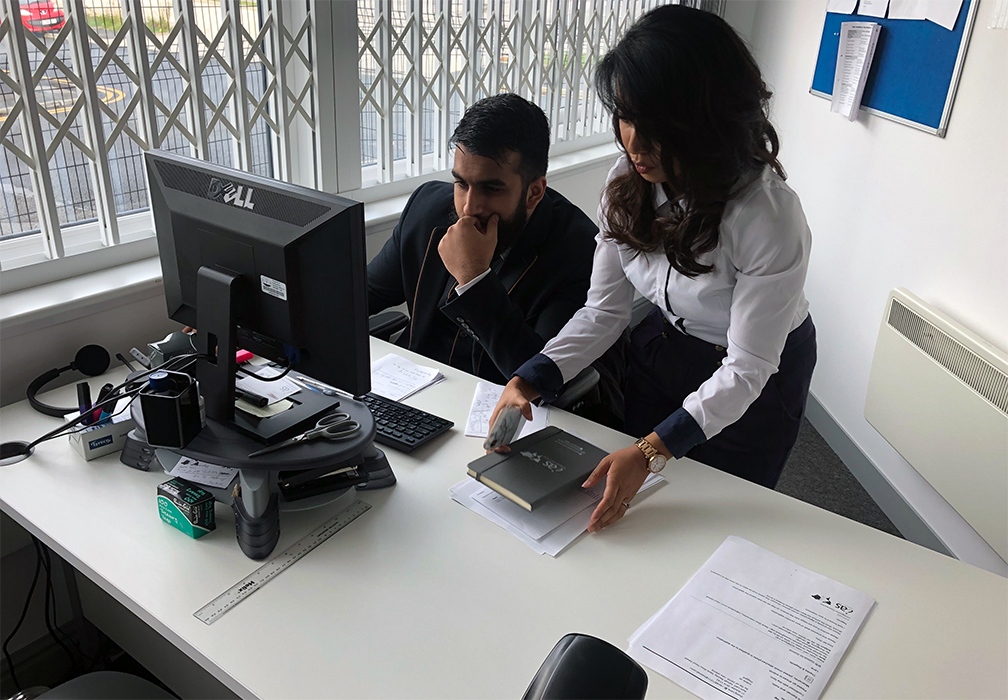
The Fast Track Package
Our Fast-Track Application Package gives your case priority with our immigration lawyers, helping you get your application prepared, checked and submitted as quickly as possible.
Your case receives priority handling, including accelerated document reviews, application preparation, communication with your caseworker and submission support.

The Appeal Package
Our immigration lawyers will review the decision, explain why it was refused and advise on the strongest option available to you, including an appeal, review or fresh application where appropriate.
We will examine the reasons for refusal, identify weaknesses or errors, assess your available options and provide the legal support and representation your case requires.
Related pages for your continued reading.
Frequently Asked Questions
You have to work in Germany for at least 8 years to get citizenship. In addition to having worked for 8 years, you must also possess the proper residence permit. A German work visa or an EU Blue Card are valid residence permits.
The fastest way to get German citizenship is by marriage. You can apply for German citizenship if you have been married to a German national for at least 3 years. However, you also need to have lived in Germany for some years.
You can have Canadian and German citizenship if your parents are German citizens living in Canada at birth. You can also have Canadian and German citizenship if you were born in Germany to Canadian parents who have permanent residence in Germany.
The German citizenship test is not hard if you study the materials you get from the Federal Office of Administration in Cologne. The test has 33 questions; you must get at least 17 right. Over 90% of people who studied and took the test passed.
You can get a German passport within 6 to 8 weeks. German passports will be issued from the printing office in Berlin.
